Passing your driving test is a major milestone, but a surprising number of learners fail due to simple, avoidable mistakes. Nerves can get the better of anyone, leading to errors you wouldn’t normally make during a lesson. The good news is that you can dramatically increase your chances of passing on the first try.
Understanding the most common UK driving test mistakes and how to avoid serious faults is the key to building confidence. This guide will walk you through exactly what examiners look for, the frequent slip-ups that lead to a failed test, and how you can prepare to drive safely and successfully.
How the UK Driving Test Is Marked
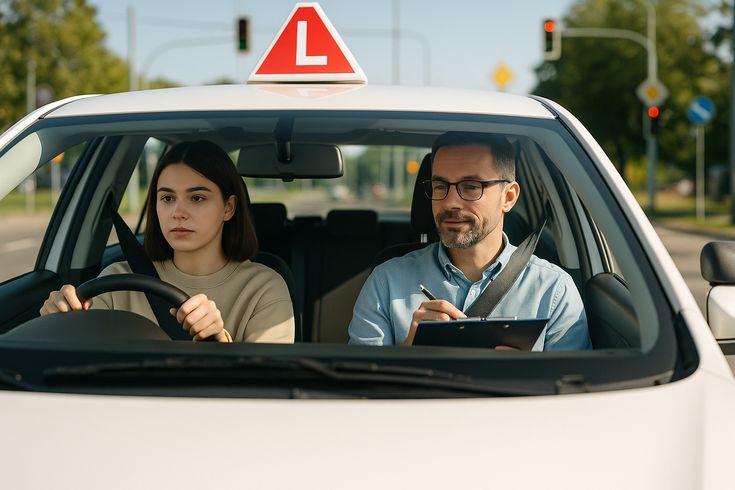
Your practical driving test is conducted by an examiner from the Driver and Vehicle Standards Agency (DVSA). Their job is not to trick you, but to assess whether you can drive safely and independently. During the test, the examiner will record any faults you make. These fall into three categories:
- Driving Faults (Minors): These are small errors that are not potentially dangerous. For example, hesitating slightly at a roundabout or stalling the car once without affecting other traffic. You can make up to 15 minor faults and still pass.
- Serious Faults: A serious fault is an error that could potentially become dangerous. This might include not checking your blind spot before changing lanes or emerging from a junction when it isn’t safe.
- Dangerous Faults: A dangerous fault involves actual danger to you, the examiner, the public, or property. This would require the examiner to intervene, either verbally or physically.
Receiving just one serious or dangerous fault will result in an immediate fail. The goal is to demonstrate consistent, safe driving.
Top 15 Most Common UK Driving Test Mistakes (With Solutions)
Let’s break down the errors that catch out learners most often.
1. Poor Observation at Junctions
- What it is: Pulling out of a junction, like a T-junction or crossroads, without properly checking for oncoming traffic, cyclists, or pedestrians.
- Why it happens: Nerves, rushing, or only looking in one direction can lead to this critical error.
- How to avoid it: Use the “look right, look left, look right again” rule. At a stop sign, your wheels must stop moving completely before you assess the road. Creep forward slowly for a better view if your vision is blocked by parked cars.
2. Not Checking Mirrors Before Signalling or Changing Speed
- What it is: Failing to check your interior and side mirrors before signalling, turning, slowing down, or speeding up.
- Why it happens: This often comes down to forgetting the fundamental Mirror-Signal-Manoeuvre (MSM) routine under pressure.
- How to avoid it: Make mirror checks a constant habit. Before you even think about hitting the brakes or indicator, your first action should be to check your mirrors to understand what is happening around you.
3. Incorrect Positioning at Roundabouts
- What it is: Being in the wrong lane when approaching a roundabout or straddling lanes while on it.
- Why it happens: Roundabouts can be confusing, especially complex, multi-lane ones. A lack of forward planning is the main cause.
- How to avoid it: Look at the road signs and markings on your approach. As a general rule, if you’re turning left or going straight ahead (up to 12 o’clock), you need the left lane. For turns to the right (past 12 o’clock), you need the right lane.
4. Hesitation or Undue Delay
- What it is: Waiting at a junction or roundabout when it is safe to proceed, causing a delay for traffic behind you.
- Why it happens: Fear of pulling out unsafely can cause over-cautiousness. This makes other drivers act unpredictably.
- How to avoid it: Practice judging gaps in traffic with your instructor. Trust your judgement. If you see a safe gap, take it. A good tip is to watch the wheels of other cars; it helps you see their intentions.
5. Incorrect Lane Discipline
- What it is: Drifting out of your lane on a straight road, or using the wrong lane on a dual carriageway.
- Why it happens: A momentary lapse in concentration or not looking far enough down the road can cause your car to wander.
- How to avoid it: Keep your eyes looking well ahead, not just at the car in front. On dual carriageways, always stay in the left-hand lane unless you are overtaking.
6. Poor Steering Control
- What it is: Over-steering or under-steering when turning, hitting the kerb during manoeuvres, or not straightening up quickly enough after a turn.
- Why it happens: This is often a result of incorrect hand positioning on the wheel or a lack of practice.
- How to avoid it: Hold the steering wheel at the ’10-to-2′ or ‘9-to-3’ position. Use the “pull-push” steering method for smooth control. Practice, practice, practice this until it feels second nature.
7. Moving Off Unsafely
- What it is: Pulling away from the side of the road without performing a final blind spot check.
- Why it happens: Forgetting the full “6-point check” (interior mirror, left mirror, right mirror, left blind spot, right blind spot, ahead) before releasing the handbrake.
- How to avoid it: Create a solid routine. Prepare the car, do your full observation check, signal if necessary, and only when you are certain it’s safe, move off.
8. Inadequate Response to Traffic Lights
- What it is: Failing to stop at a red light, stopping beyond the white line, or not proceeding when a light turns green.
- Why it happens: Not anticipating the lights changing or being distracted can lead to these errors.
- How to avoid it: Scan the road ahead. If a traffic light has been green for a while, anticipate that it might change and be ready to stop smoothly.
9. Not Responding Properly to Road Signs
- What it is: Ignoring a speed limit change, a “No Entry” sign, or other important road signs.
- Why it happens: This is a failure of observation, often caused by focusing too much on the car’s controls instead of the road ahead.
- How to avoid it: Get into the habit of actively looking for and identifying road signs during your lessons. When you see one, say out loud what it is and how you will react to it.
10. Incorrect Use of Speed
- What it is: Driving too fast for the conditions or too slowly without a valid reason.
- Why it happens: Nerves can make you speed up, while fear can make you drive excessively slowly.
- How to avoid it: Always drive at a speed that is appropriate for the road and weather conditions, while staying within the speed limit. Avoid driving unnecessarily slowly, as this can be marked as hesitation.
11. Rolling Back on Hill Starts
- What it is: Allowing the car to roll backward when moving off on an incline.
- Why it happens: Poor clutch control or incorrect use of the handbrake.
- How to avoid it: Practice finding the “biting point” of the clutch. Secure the car with the handbrake, find the biting point, perform your checks, and then release the handbrake as you gently apply the accelerator.
12. Not Maintaining Safe Following Distance
- What it is: Driving too close to the vehicle in front, also known as tailgating.
- Why it happens: Underestimating stopping distances or feeling pressured by other drivers.
- How to avoid it: Use the “two-second rule.” Pick a fixed point, like a signpost. When the car in front passes it, you should be able to say “Only a fool breaks the two-second rule” before you pass it. Double this to four seconds in wet weather.
13. Weak Control During Manoeuvres
- What it is: Lacking precision during parallel parking, bay parking, or reversing, often resulting in hitting the kerb or needing too many corrections.
- Why it happens: This comes down to a lack of practice and poor observation.
- How to avoid it: Practice your manoeuvres until you are bored of them. Go slowly, and remember that observation is more important than speed. Constant all-around checks are essential.
14. Failing “Show Me, Tell Me” Questions
- What it is: Being unable to answer one “tell me” question at the start of the test or one “show me” question while driving.
- Why it happens: Simply not revising them.
- How to avoid it: These are some of the easiest marks to get. Go through all the potential questions with your instructor and practice performing the actions (e.g., how to wash the windscreen) while the car is parked.
15. Losing Focus Due to Nerves
- What it is: Letting a small mistake spiral, causing you to lose concentration and make more significant errors.
- Why it happens: The pressure of the test environment is immense.
- How to avoid it: Understand that you are allowed to make minor faults. If you stall or make a small error, take a deep breath, reset, and focus on the road ahead. Don’t dwell on it.
How to Avoid Serious Faults Specifically
The difference between a minor and a serious fault often comes down to awareness. Here’s how to stay out of the serious fault zone:
- Observation and Planning: Constantly scan the road ahead, to the sides, and in your mirrors. This gives you time to react to hazards.
- Master the MSM Routine: Mirror-Signal-Manoeuvre should be automatic. It’s the foundation of safe driving and prevents many serious faults related to changing direction or speed.
- Take Mock Tests: Ask your instructor to conduct a proper mock test under exam conditions. This is the best way to see how you perform under pressure and identify weaknesses.
- Practise Independent Driving: The independent driving section is where you follow signs or a sat nav. Practice this to build your confidence in making your own decisions.
Bonus: Tips for Staying Calm on Test Day
- Arrive Early: Get to the test centre with about 10-15 minutes to spare. Rushing will only increase your anxiety.
- Breathe and Reset: If you make a mistake, take a deep breath. Acknowledge it and move on. The examiner is assessing your overall driving, not one tiny error.
- Minors Don’t Mean Failure: Remember, you can have up to 15 minor faults. A small slip-up is not the end of the world.
- Treat it Like a Lesson: Try to think of the test as just another driving lesson where you’re showing a new instructor what you can do.
Conclusion
Passing your driving test is an achievable goal. Most failures are not due to a lack of skill, but to preventable mistakes made under pressure. By understanding these common pitfalls and focusing on consistent observation and planning, you can approach your test with the confidence you need.
Keep up the consistent practice, listen carefully to your instructor’s feedback, and trust in the skills you have developed. You are more prepared than you think. Good luck
If you’re looking for the best driving school in South West London, Flex Driving Academy LTD offers professional and result-driven training tailored to your needs. Whether you need automatic driving lessons in South West London, want to pass quickly with a fast pass intensive course, or prefer a fast track intensive driving course in South West London, our experienced instructors are here to help you succeed. We focus on building confidence, improving road awareness, and helping you pass your driving test as quickly as possible.