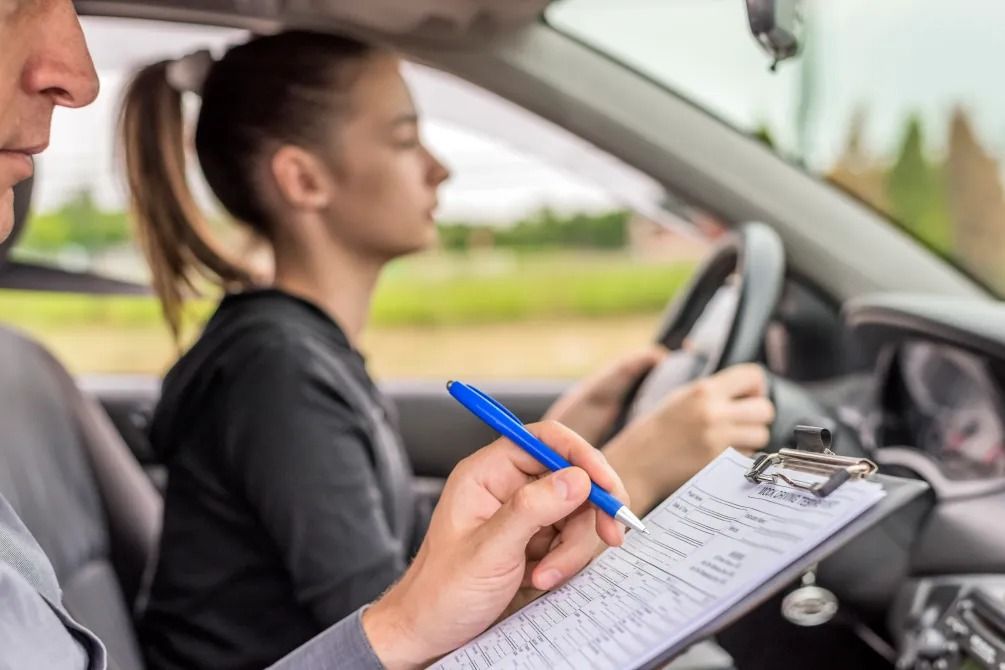
Getting on the road gives you incredible freedom and independence. To start driving legally, you need to understand the exact rules and steps involved. This guide breaks down the complete journey from a beginner to a qualified driver.
What Are the UK Driving Licence Requirements?
Understanding the UK driving licence requirements forms the foundation of your driving journey. The system moves you from a learner permit to a fully qualified driver through a structured series of tests and checks.
To start learning, you must meet a few basic eligibility criteria:
- You must live in Great Britain for at least 185 days of the year.
- You need to meet the minimum eyesight rules. You must read a standard car license plate from 20 meters away.
- You need valid identification, usually a biometric passport, to prove your identity and residency status when applying.
Driving Age UK Requirements
The driving age UK requirements depend on the specific type of vehicle you want to operate.
- Minimum age for cars: You can apply for your provisional license when you are 15 years and 9 months old. However, you can only drive a car on public roads once you turn 17.
- Mopeds and light quads: The age requirement drops to 16 for these smaller vehicles.
- Exceptions for disability: If you receive the enhanced rate of the mobility component of the Personal Independence Payment (PIP), you can legally drive a car at 16.
How to Get Driving License UK: The Step-by-Step Process
Learning how to get driving license UK involves a clear, five-part system. Follow these steps to navigate the process smoothly.
Step 1 – Apply for a Provisional Driving License
Your first step involves getting your official learner permit. You can apply online through the official government portal or by post using a D1 form.
You must follow specific provisional license UK rules the moment you get behind the wheel:
- You must display red ‘L’ plates (or ‘D’ plates in Wales) on the front and back of your vehicle at all times.
- You need appropriate learner driver insurance if driving your own car or a family member’s car.
- A qualified driver must supervise you. This person must be over 21 and have held a full driving license for that vehicle type for at least three years.
Step 2 – Start Driving Lessons
Most learners benefit greatly from hiring an Approved Driving Instructor (ADI). Professional instructors teach you the correct habits right from the start. They also know exactly what examiners look for during the final test.
We recommend mixing professional lessons with supervised private practice. Practicing with a family member helps you build confidence and muscle memory between your official lessons.
Step 3 – Pass the Theory Test
You must pass your theory test before booking your practical exam. The test involves two distinct parts:
- A multiple-choice section covering the Highway Code, road signs, and driving regulations.
- A hazard perception test using video clips to measure how quickly you spot developing dangers on the road.
Study the Highway Code thoroughly. Prepare early so you do not delay your practical test booking.
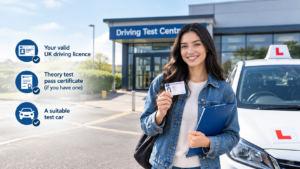
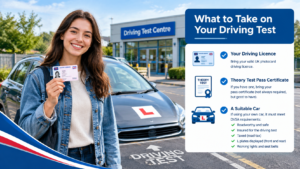
Step 4 – Take the Practical Driving Test
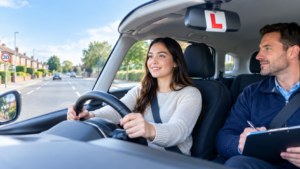
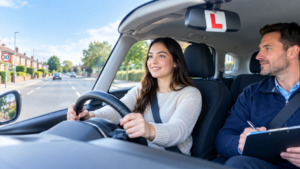
The practical driving test assesses your ability to drive safely in various conditions. Test day includes:
- An eyesight check before you enter the car.
- “Show me, tell me” vehicle safety questions.
- An assessment of your general driving ability.
- An independent driving section lasting about 20 minutes, usually following a GPS.
To pass, you must avoid serious or dangerous faults (majors). You are allowed up to 15 minor driving faults, though aiming for zero ensures a much better result.
Step 5 – Get Your Full Driving License
Once you pass the practical test, the examiner takes your provisional card and sends your pass certificate to the Driver and Vehicle Licensing Agency (DVLA). Your full driving license arrives in the mail shortly afterward.
New drivers face a two-year probationary period. If you accumulate six penalty points during this time, the DVLA will revoke your license, and you must start the entire process over.
Common Mistakes New Learners Make
New drivers often stumble on a few predictable hurdles.
- Delaying theory test prep: Waiting to study for the theory test holds up your entire timeline. Book and prepare for it early.
- Ignoring provisional rules: Driving without proper supervision or correct learner insurance breaks the law and risks severe penalties.
- Not enough varied practice: Driving only on sunny days limits your experience. Practice driving at night, in the rain, and on various road types to build real-world confidence.
Tips to Get Your Driving License Faster
- Book tests early: DVLA wait times fluctuate. Secure your test slots well in advance to avoid long delays.
- Take mock practical tests: Ask your instructor for a simulated test. This reduces nerves and shows you exactly what the examiner expects.
- Stay consistent: Taking regular weekly lessons builds skills much faster than spacing them out over several months.
FAQs About Learning to Drive
How to get driving license UK step by step?
Apply for a provisional permit, take regular driving lessons, pass your theory test, pass your practical driving exam, and upgrade to a full license.
What are the driving age UK requirements?
You can drive a car at 17, but you can ride a moped at 16. You can apply for your provisional permit a few months before your 17th birthday.
What are the main provisional license UK rules?
You must always drive with a qualified supervisor, display ‘L’ plates, and hold proper learner insurance. You cannot drive on motorways unless accompanied by an approved dual-control instructor.
How long does it take to learn to drive?
The Driver and Vehicle Standards Agency (DVSA) suggests an average of 45 hours of professional instruction and 22 hours of private practice to pass the test.
Final Thoughts – Start Your Driving Journey the Right Way
Getting your license takes time, patience, and consistent practice. Apply for your provisional permit, book your first lesson, and start studying the Highway Code today. Keep in mind that official rules and test formats can vary slightly over time. Always check the official UK government website for final confirmation on all laws and requirements. Stay focused, practice safely, and enjoy the journey to becoming a fully licensed driver.