Learning to drive means building a set of practical skills that let you control a car safely and make sound decisions on the road. It’s more than turning a wheel and pressing pedals — it’s observation, anticipation, positioning, and knowing the rules that keep everyone safe. If you’re wondering how to do driving from the very start, this guide walks you through the whole process in plain language.
Driving is a skill you develop step by step, not overnight. Most learners in the UK build confidence through a mix of structured lessons and supervised practice, guided by the Highway Code and DVSA (Driver and Vehicle Standards Agency) standards. Many people find that working with a qualified instructor speeds up their progress, and booking professional driving lessons gives you feedback you simply can’t get on your own.
This guide covers what you need before you start, how to control a car, how to drive safely, common mistakes, and how to know when you’re test-ready.
What Does It Mean to Learn How to Drive?
Learning to drive means combining vehicle control with road awareness and safe judgement. Steering and using the pedals are only the mechanical side. The bigger part is what happens in your head.
Good drivers do four things well:
- Observe — constantly scanning mirrors, junctions, and the road ahead.
- Anticipate — reading what other road users are likely to do next.
- Position — placing the car correctly for the road and situation.
- Decide — choosing safe actions and timing them well.
Think of a child’s ball rolling into the road. A skilled driver has already eased off the accelerator before it appears, because they spotted the children playing nearby. That’s anticipation in action — and it’s what separates a safe driver from someone who simply operates a car.
What You Need Before Learning to Drive
You need a provisional driving licence before you can legally drive on UK roads. This is the single most important requirement, and you can apply for it on GOV.UK once you meet the age and eligibility rules.
Before your first lesson, make sure you have:
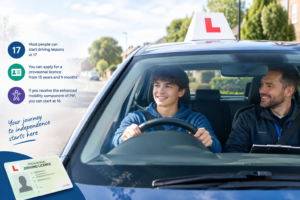
- A valid provisional licence — you can usually apply from age 17 (or 16 if you receive certain mobility benefits).
- Correct eyesight — you must be able to read a number plate from 20 metres.
- Appropriate supervision — any private practice must be with someone aged 21 or over who has held a full licence for at least three years for that type of car.
- Proper insurance and L plates — the car must be insured for a learner, with L plates (or D plates in Wales) clearly displayed.
Check the official learner-driver rules on GOV.UK before you get behind the wheel.
How to Learn to Drive Step by Step
Learning to drive follows a logical order, from basic controls to complex road situations. A qualified instructor introduces each skill when you’re ready for it, so you’re never overwhelmed. Here’s the typical path.
- Choose a qualified driving instructor — pick an Approved Driving Instructor (ADI), shown by a green badge in the windscreen.
- Understand the vehicle controls — learn what each pedal, lever, and switch does before you move.
- Set up your driving position — adjust the seat, mirrors, and steering position for comfort and clear vision.
- Start the vehicle safely — learn the correct sequence for starting and preparing to move.
- Practise moving off and stopping — begin on quiet roads until it feels natural.
- Steer and hold road position — keep the car steady and correctly placed in the lane.
- Master clutch control and gears — for manual cars, this takes time, so be patient.
- Accelerate and brake smoothly — smooth inputs keep the car stable and comfortable.
- Use mirrors and signals — check, signal, and act in the right order every time.
- Learn junctions and roundabouts — approach, observe, and emerge safely.
- Change lanes safely — check mirrors and blind spots before every move.
- Practise parking and manoeuvres — including reversing, bay parking, and parallel parking.
- Develop hazard awareness — spot and respond to risks early.
Your instructor will confirm when you’re ready to move from one stage to the next.
How to Control a Car as a Beginner
Controlling a car means using each control confidently and in the right combination. For beginners, learning these under supervision is essential — never try to teach yourself on public roads.
Here’s what each main control does:
- Steering wheel — turns the car; keep both hands on it, roughly at the “ten to two” or “quarter to three” position.
- Accelerator — the right pedal; press gently to increase speed.
- Brake — the middle pedal; use progressive pressure to slow down smoothly.
- Clutch (manual cars only) — the left pedal; connects and disconnects the engine from the wheels when changing gear.
- Gears — match engine power to your speed; lower gears for slow speeds, higher gears for faster roads.
- Handbrake — holds the car still when parked or waiting.
- Mirrors — give you a view behind and to the sides; check them regularly.
- Indicators — signal your intentions to other road users.
- Lights — help you see and be seen, especially in poor conditions.
Automatic cars remove the clutch and manual gear changes, which many learners find easier at first. Practise each control until it becomes second nature.
How to Drive Safely on UK Roads
Driving safely means following the Highway Code and constantly managing risk. Safety isn’t a single skill — it’s a habit you apply on every journey.
Focus on these safe-driving essentials:
- Follow the Highway Code — it sets the rules and best practice for all road users.
- Keep to appropriate speeds — obey limits and slow down further when conditions demand.
- Leave safe following distances — use the two-second rule, doubling it in wet weather.
- Check your mirrors regularly — know what’s around you before you act.
- Signal correctly and early — give others time to react.
- Watch vulnerable road users — pedestrians, cyclists, and motorcyclists need extra space and care.
- Anticipate hazards — look well ahead and plan your response.
- Adapt to weather and traffic — rain, fog, and heavy traffic all change how you drive.
- Avoid distractions — never use a handheld phone, and keep your focus on the road.
Read the current Highway Code on GOV.UK and revisit it throughout your learning.
Common Mistakes Beginner Drivers Make
Most beginner mistakes come down to observation, timing, and nerves. Recognising them early helps you fix them faster.
Watch out for these common slips:
- Poor mirror checks — build a routine: mirrors, signal, manoeuvre.
- Late signalling — signal in good time, not as you turn.
- Incorrect road positioning — stay centred in your lane and follow lane markings.
- Harsh braking — brake earlier and more gently.
- Excessive speed — match your speed to the road and conditions.
- Missing hazards — scan further ahead to spot risks sooner.
- Getting distracted — silence your phone and limit conversation while learning.
- Over-relying on sat-nav — watch the road, not the screen.
- Nerves in busy traffic — practise in quieter areas first, then build up gradually.
Ask your instructor to focus on the areas you find hardest.
How Long Does It Take to Learn to Drive?
There is no fixed number of lessons that suits every learner. Learning time depends on how often you practise, how quickly you pick up skills, and how much supervised experience you get between lessons.
Some people learn faster than others, and that’s completely normal. Focus on developing genuine skill and confidence rather than rushing towards a test date. Rushing rarely pays off — and safe driving lasts a lifetime.
How Driving Lessons Help Beginners
Structured driving lessons give you expert guidance you can’t easily replicate alone. A qualified instructor spots errors you might not notice and corrects them before they become habits.
Lessons help by offering:
- Personalised feedback on your specific weak points.
- Progressive learning that introduces skills in the right order.
- Strong safety awareness grounded in DVSA standards.
- Real preparation for independent driving after you pass.
How to Practise Between Driving Lessons
Private practice reinforces what you learn in lessons — but only when it’s legal and safe. You must meet all learner requirements first.
Before practising privately, confirm you have:
- A valid provisional licence.
- A supervisor aged 21 or over who has held a full licence for at least three years.
- Correct learner insurance on the vehicle.
- L plates displayed on the car.
Even short, regular practice sessions help skills stick.
How to Know When You Are Ready for the Driving Test
You’re ready for your driving test when you can drive safely and consistently without prompts. Test readiness is about steady performance, not luck on the day.
Signs you’re getting close:
- Consistent, confident car control.
- Reliable observation and mirror use.
- Good forward planning and hazard awareness.
- Correct road positioning in different situations.
- Sound, independent decision-making.
Your instructor is best placed to confirm when you’re ready to book.
Frequently Asked Questions
How do you start learning to drive?
Apply for a provisional driving licence on GOV.UK, then book lessons with an Approved Driving Instructor to begin learning safely.
What is the easiest way to learn driving?
The easiest way is structured lessons with a qualified instructor, supported by regular supervised practice between sessions.
Can I learn to drive without an instructor?
You can practise with a qualified supervisor if you meet all legal requirements, but a professional instructor teaches correct technique and safety from the start.
How long does it take to learn to drive?
It varies for everyone. Learning depends on your practice frequency, natural ability, and confidence, so focus on skill rather than a fixed timeline.
What are the basic skills needed for driving?
The core skills are vehicle control, observation, anticipation, correct positioning, safe decision-making, and knowledge of the Highway Code.
What should a beginner driver learn first?
Start with the car controls and your driving position, then move on to moving off, stopping, and steering on quiet roads.
Ready to Start Driving?
Learning to drive is one of the most rewarding skills you’ll ever gain, and the right support makes all the difference. If you’re ready to begin, consider structured lessons with Flex Driving Academy. Their qualified instructors guide you through every stage — from your first time behind the wheel to confident, independent driving — at a pace that suits you. Get in touch to take your first step on the road.