More learner drivers in the UK are choosing automatic driving lessons than ever before. It’s easy to see why. Automatic vehicles remove one of the biggest challenges for new drivers — managing the clutch and gears — so you can focus on what really matters: road awareness, safety, and building confidence. If you’re thinking about learning to drive but feel nervous about where to start, automatic lessons could be exactly the right choice. This guide covers everything you need to know, from how your first lesson will feel to how quickly you can expect to pass your test.
What Are Automatic Driving Lessons?
Automatic driving lessons are structured sessions where you learn to drive a car with an automatic transmission, meaning the vehicle changes gears for you. Unlike manual cars, there’s no clutch pedal and no gear lever to manage manually.
Many new drivers prefer automatics because they can concentrate on steering, observation, and hazard awareness without the added mental load of gear control. For driving lessons for beginners, this simplified setup often leads to faster skill development and greater confidence on the road.
Benefits of Learning in an Automatic Car
The benefits of automatic driving lessons go beyond just simplicity. Here’s what makes them a strong choice:
- Easier vehicle control — With no clutch to balance, you have both hands free for steering and your full attention on the road.
- No clutch or gear changes — This eliminates one of the most common causes of stalls and errors for new drivers.
- Faster learning curve — Many learners reach test-ready standard more quickly because they’re not splitting focus between mechanical controls and road skills.
- Less stress in traffic — Stop-start city driving becomes far less demanding without constant clutch work. Roundabouts and hill starts feel far more manageable.
- Increased confidence for nervous drivers — When the car is easier to control, anxiety levels drop. This is particularly valuable for learners who feel intimidated behind the wheel.
If you’ve stalled at a busy junction in your imagination and dreaded the idea of doing it for real, automatic lessons remove that fear entirely.
How Automatic Cars Work
Understanding your car’s controls helps you drive with greater confidence. Automatic transmission works by using a hydraulic system to change gears based on your speed and throttle input — you simply steer, accelerate, and brake.
The gear selector typically has four main positions:
- P (Park) — Locks the transmission. Use this when the car is stationary and you’re leaving the vehicle.
- R (Reverse) — Selects reverse gear for moving backwards.
- N (Neutral) — Disconnects the engine from the wheels. Rarely needed during normal driving.
- D (Drive) — The position you’ll use for all forward driving. The car handles all gear changes automatically.
Most of your driving will be done entirely in D. It really is that straightforward.
What to Expect During Your First Automatic Driving Lesson
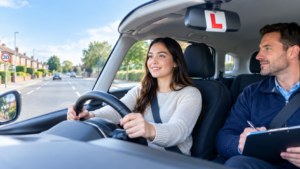
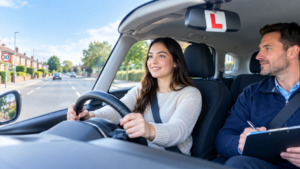
Your first lesson with an automatic driving instructor will be structured and supportive. Here’s a typical outline:
- Safety checks — Your instructor will walk you through basic vehicle checks: tyres, lights, and fluid levels.
- Cockpit drill — You’ll adjust your seat, mirrors, and steering column to ensure you’re comfortable and in full control.
- Moving off and stopping — You’ll practise pulling away smoothly and applying the brakes progressively.
- Steering techniques — Your instructor will show you proper hand position and how to steer accurately at low speed.
- Basic road positioning — You’ll learn where to position the car within your lane and how to approach junctions safely.
- Instructor feedback — Throughout the lesson, your instructor will offer calm, constructive guidance to help you improve.
Don’t expect perfection on day one. Every learner makes mistakes early on, and that’s completely normal.
How Many Automatic Driving Lessons Do You Need?
The honest answer is: it varies. Several factors influence how quickly you progress:
- Your natural aptitude and previous driving experience
- How regularly you take lessons
- Whether you supplement lessons with private practice
- Your ability to apply feedback between sessions
On average, learner drivers need around 20–30 hours of professional instruction before reaching test standard, though some need more. Compared to manual learners — who typically require 40–45 hours — automatic learners often reach the same level of competence in less time.
You can choose between weekly lessons (one or two hours per week, spread over several months) or an intensive automatic driving course (multiple hours per day over a week or two). Intensive courses suit people who need a licence quickly, while weekly lessons allow more time to consolidate each skill.
Tips to Learn Faster and Pass Your Test Sooner
Progress comes faster when you take a proactive approach:
- Practise regularly — Even short sessions between lessons reinforce what you’ve learned.
- Study the Highway Code — Your theory test and hazard perception test both draw directly from it.
- Watch driving tutorials — Quality video content showing real driving scenarios can sharpen your understanding before you’re behind the wheel.
- Learn from every mistake — Ask your instructor to explain what went wrong and how to fix it. Mistakes are learning opportunities.
- Take mock driving tests — Practice runs in test conditions reduce nerves and reveal gaps in your skills.
- Stay calm and focused — Anxiety affects performance. Breathing techniques and good preparation help enormously.
Common Mistakes Beginner Drivers Make
Even in an automatic, new drivers fall into predictable patterns. Watch out for these:
- Poor observation — Not scanning far enough ahead or failing to check junctions properly. Fix: practise looking well ahead and checking both ways before emerging.
- Incorrect speed control — Going too fast for the conditions or braking too late. Fix: match your speed to the road environment, not just the speed limit.
- Lack of mirror checks — Forgetting to check mirrors before changing speed or position. Fix: build mirror checks into every manoeuvre as a habit.
- Hesitation at junctions — Waiting too long when the road is clear. Fix: trust your observations and commit to your decision.
- Weak hazard awareness — Missing developing situations early enough to respond safely. Fix: practice hazard perception clips and think ahead on every drive.
Is Learning Automatic Right for You?
Automatic lessons suit a wide range of learners:
- Nervous drivers — The simplified controls make learning far less overwhelming.
- Busy professionals — Intensive automatic driving courses allow you to qualify quickly around a demanding schedule.
- Mature learners — Many older learners find automatic vehicles easier to manage, particularly those with physical limitations.
- People needing a licence quickly — Faster progression means a shorter route to passing.
- Long-term automatic drivers — If you plan to drive an automatic car for the foreseeable future, there’s no practical reason to learn in a manual.
The one consideration worth noting: an automatic licence restricts you to driving automatic vehicles only. If you later want to drive a manual, you’ll need to pass an additional test.
Frequently Asked Questions
Are automatic driving lessons easier?
Yes, for most people. Removing clutch and gear control simplifies the learning process and lets you focus on road skills sooner.
Is the automatic driving test easier?
The test standard is identical to the manual test. You’re assessed on the same skills: observation, control, and decision-making. However, many learners find it easier to perform well because the car is simpler to manage.
Can I drive a manual car with an automatic licence?
No. An automatic-only licence does not permit you to drive a manual vehicle. You would need to take a further test in a manual car.
Are automatic lessons more expensive?
Automatic driving schools may charge slightly more per lesson due to higher vehicle costs. However, if you require fewer lessons overall, the total cost is often comparable to — or less than — manual training.
How quickly can I learn?
Some learners pass within six to eight weeks on an intensive course. Others take several months with weekly lessons. Progress depends on consistency, practice, and your starting level of confidence.
Conclusion
Automatic driving lessons offer a practical, confidence-building route into driving for a wide range of beginners. The absence of clutch and gear management means you can focus on the skills that really matter: observation, road positioning, and safe decision-making. Most learners progress faster and experience less stress compared to manual training.
To get the best results, choose a DVSA-approved automatic driving instructor with a strong track record. Combine your lessons with regular practice, Highway Code study, and a calm, committed mindset. The road ahead is more straightforward than you think — and with the right support, you’ll be ready to pass your automatic driving test sooner than you expect.