After more than 15 years training learners and preparing them for their practical exams, I’ve watched the same worry surface time and again. Learners want to know the exact roads they’ll drive on. Understanding driving test routes UK is useful, but knowing how examiners assess you matters far more. This guide explains what test routes are, how the DVSA practical test works, and the practical steps that genuinely improve your chances of passing.
What Are Driving Test Routes in the UK?
Driving test routes UK are the roads an examiner uses around a local test centre to assess your driving. Each centre has several routes covering different road types and conditions. The DVSA no longer publishes official routes. Examiners choose from a range of local roads to test whether you can drive safely and confidently in real traffic.
These routes are not fixed scripts. They’re designed to give you exposure to varied situations so your examiner can judge your ability across residential streets, junctions, and faster roads. That’s why memorising one path rarely helps.
How the DVSA Practical Driving Test Works
The UK practical driving test lasts around 40 minutes and follows a set structure. According to GOV.UK, the test covers five main areas. Here’s what to expect from start to finish.
- Vehicle safety questions — You’ll answer one “show me” and one “tell me” question about basic car maintenance and safety checks.
- General driving — You’ll drive on a mix of local roads while the examiner assesses your control, observation, and decision-making.
- Independent driving — For about 20 minutes, you’ll drive by following a sat-nav or road signs without turn-by-turn guidance.
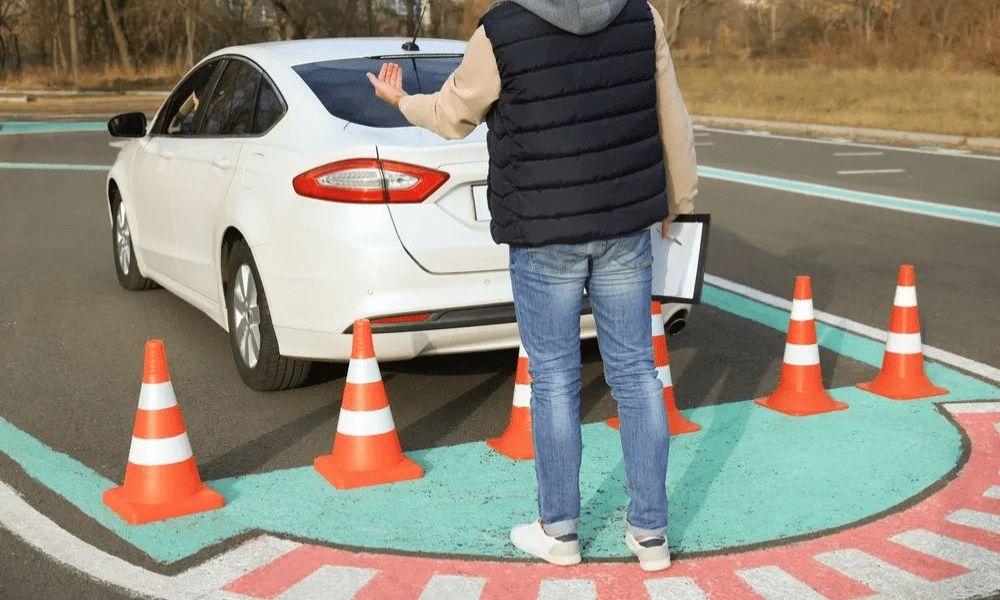
- Manoeuvres — You’ll perform one reversing exercise, such as parallel parking, bay parking, or pulling up on the right and reversing.
- Emergency stop — Around one in three tests includes a controlled stop, where you must brake safely and quickly on request.
You pass if you make no more than 15 minor faults and zero serious or dangerous faults, as confirmed on gov.uk.
Do Driving Test Routes Change?
Yes. Driving test routes change regularly, and examiners adapt them on the day. No two tests are guaranteed to be identical, even from the same centre. Several factors shape the route your examiner chooses, which is exactly why flexible driving skills matter more than a memorised map.
- Traffic conditions — Examiners adjust to avoid unnecessary delays or unsafe congestion.
- Roadworks — Temporary closures force route changes at short notice.
- Weather — Poor visibility or icy conditions may influence which roads are used.
- Time of day — School runs and rush hour affect which areas are practical to assess.
Common Roads You’ll Drive On
Your test route will likely include a broad selection of road types. Each one tests a different skill, from careful observation to confident speed control. In my experience, learners who practise across all of these feel far calmer on test day.
| Road Type | What It Tests |
| Residential roads | Speed control, parked-car awareness, pedestrian observation |
| Roundabouts | Lane positioning, signalling, gap judgement |
| Dual carriageways | Confident speed, safe joining and exiting |
| Country roads | Bend reading, hazard anticipation, overtaking judgement |
| Busy town centres | Complex observation, patience, junction control |
| Junctions | Approach speed, mirror checks, correct positioning |
| Traffic lights | Anticipation, box junction awareness |
| One-way systems | Lane discipline, clear signalling |
How to Prepare for Driving Test Routes
Preparation isn’t about learning one route by heart. It’s about building the skills to handle any road your examiner picks. Here’s the approach I recommend to every learner I train.
- Take lessons around your local test centre so you’re familiar with common road layouts and tricky junctions.
- Book mock driving tests to experience full test conditions before the real thing.
- Drive at different times of day to practise in both quiet and busy traffic.
- Repeat difficult junctions until your positioning and timing feel natural.
- Sharpen your observation skills, checking mirrors and blind spots consistently.
- Practise speed awareness, matching your speed to changing limits and conditions.
- Master mirror-signal-manoeuvre routines until they become automatic.
Consistent, structured practice with a qualified instructor builds the adaptability examiners look for. Our Driving Lessons and Driving Test Preparation sessions focus on exactly these areas.
Most Common Driving Test Mistakes
Over the years, I’ve seen the same faults cost learners their pass. The good news is that every one of them is avoidable with focused practice. Here are the mistakes I correct most often and how to fix them.
- Poor observations — Not checking mirrors or blind spots before moving. Fix: build a habit of checking early and often.
- Incorrect signalling — Signalling too late, too early, or not at all. Fix: signal in good time to help other road users.
- Weak speed control — Driving too fast or too slowly for the conditions. Fix: read speed limits and adjust smoothly.
- Lane discipline errors — Drifting or choosing the wrong lane on roundabouts. Fix: plan your exit early.
- Hesitation — Waiting too long at junctions when it’s safe to go. Fix: practise judging gaps with confidence.
- Junction positioning — Approaching turns in the wrong position. Fix: position yourself early and clearly.
- Inadequate mirror use — Forgetting mirror checks before slowing or turning. Fix: use mirror-signal-manoeuvre every time.
Benefits of Learning Local Driving Test Areas
Learning the roads around your test centre builds real confidence. When you recognise a challenging roundabout or a hidden junction, you can focus your attention on driving safely rather than reacting under pressure. Familiarity reduces surprises, and calmer learners make fewer mistakes.
That said, familiarity is a bonus, not a shortcut. Examiners assess safe, competent driving, not route recall. The learners who pass first time combine local knowledge with solid, transferable driving skills.
Can You Find Driving Test Routes Online?
You’ll find unofficial route guides and videos online, but the DVSA stopped publishing official routes years ago. Any guide you find may be outdated, and your actual test could differ completely. Treat these resources as rough familiarity tools, not a plan to memorise. Building adaptable driving skills is a far safer investment of your time.
Why Choose Professional Driving Lessons?
A qualified instructor gives you structure and honest feedback that private practice alone can’t match. In my lessons, I focus on turning weak points into strengths before test day arrives. Professional instruction helps you in clear, measurable ways.
- Identify weaknesses through objective assessment on real roads.
- Simulate test conditions with realistic mock driving tests.
- Build confidence by repeating challenging scenarios safely.
- Teach defensive driving so you anticipate hazards early.
- Prepare you for different road environments, from quiet lanes to busy town centres.
Conclusion
Understanding driving test routes UK gives you a helpful head start, but it’s your driving skills that earn the pass. Examiners use varied local roads to check that you can drive safely and confidently in any situation. Focus on observation, speed control, and smooth manoeuvres rather than memorising a single route. Always check the latest guidance on GOV.UK and revisit The Highway Code as your foundation. With consistent practice and professional instruction, you’ll walk into your test ready for whatever route comes your way.
Frequently Asked Questions
Are UK driving test routes the same every day?
No. Routes vary from test to test, even at the same centre. Examiners adapt to traffic, roadworks, and weather on the day. That’s why building adaptable driving skills matters far more than trying to memorise one specific route.
Can I practise my local driving test routes?
Yes, and it’s a smart move. Practising the roads around your test centre helps you recognise tricky junctions and roundabouts. Familiarity reduces stress on test day, but remember your examiner may still choose roads you haven’t driven before.
How many routes does a test centre have?
Most centres use several routes covering a range of road types and conditions. The DVSA doesn’t publish an exact number, and routes are updated over time. Focus on driving skills that transfer across all of them rather than counting routes.
Are driving test routes available online?
Unofficial guides and videos exist, but the DVSA no longer publishes official routes. Online information may be outdated and your real test could differ. Use these resources only for rough familiarity, never as a plan to memorise your test.
Do examiners deliberately use difficult roads?
No. Examiners aren’t trying to trick you. They select roads that assess safe, competent driving across common situations. Some routes include challenging junctions or roundabouts, but only to check you can handle everyday driving conditions confidently and safely.
Is the sat-nav used in every test?
Not always. During the independent driving section, about four in five tests use a sat-nav supplied by the examiner. The rest follow road signs. You won’t fail for taking a wrong turn, as long as you drive safely throughout.
Can roadworks change my driving test route?
Yes. Roadworks and temporary closures often force examiners to adjust routes at short notice. This is another reason memorising a route isn’t reliable. Practise responding calmly to unexpected changes so you stay confident whatever the roads look like.
Should I memorise driving test routes?
No. Memorising routes gives a false sense of security because your actual test may differ. Examiners assess your driving ability, not route recall. Spend your time improving observation, speed control, and manoeuvres, which apply to every route you could face.
How can I increase my chances of passing?
Practise regularly with a qualified instructor, book mock tests, and drive in varied conditions. Master your mirror-signal-manoeuvre routines and sharpen your observation. Consistent, structured preparation builds the calm confidence examiners look for. Check current guidance on GOV.UK before your test.
How many serious faults are allowed?
None. To pass, you must make no serious or dangerous faults and no more than 15 minor faults, according to gov.uk/driving-test/driving-test-faults-result. Focus on safe, smooth driving to keep minor faults low and avoid serious ones entirely.