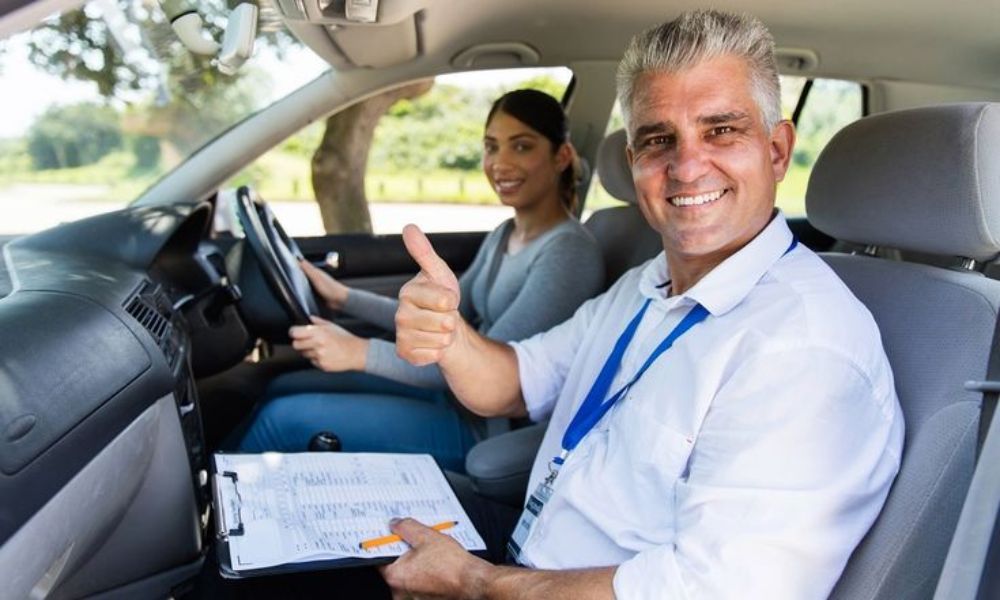
Passing your practical driving test is a brilliant moment. All those lessons, mock tests and early-morning nerves have finally paid off. But here’s something every good instructor will tell you: knowing what to do after passing your driving test matters just as much as passing it. The test marks the start of your journey as an independent driver, not the finish line. From that first moment you sit behind the wheel alone, the real learning begins.
The good news? You can drive straight away, provided you’re properly insured. Let’s walk through everything you need to know.
Quick Answer: What to Do After Passing Your Driving Test
- Take your pass certificate from the examiner and keep it safe.
- Sort your insurance as a full licence holder before you drive alone.
- Wait for your full licence — DVLA usually posts it automatically.
- Plan an easy first solo drive on roads you already know.
- Build experience gradually with junctions, night driving and bad weather.
- Consider motorway lessons or Pass Plus to fill gaps in your experience.
What Happens Immediately After You Pass Your Driving Test?
Once you’ve completed your practical driving test successfully, the examiner will run through a few things before you leave. According to GOV.UK, here’s what normally happens:
- The examiner confirms that you’ve passed.
- You receive your driving test pass certificate.
- The examiner takes your provisional photocard licence (in most cases).
- DVLA is asked to send you your full driving licence.
- The examiner explains any driving faults recorded during your test.
That last point is worth listening to carefully. Even a clean pass usually includes a handful of minor faults, and the examiner’s feedback tells you exactly where to keep improving. Jot it down mentally — it’s genuinely useful.
Your pass certificate is important. While you wait for your full licence to arrive, this certificate acts as proof that you’ve passed. Keep it somewhere safe.
Can You Drive Straight Away After Passing?
Yes. You can start driving as soon as you pass your practical driving test, but you must have suitable insurance that allows you to drive without supervision.
That’s the legal position confirmed by GOV.UK. The moment you pass, your provisional restrictions no longer apply — no L-plates, no supervising driver, no dual controls.
But being legally allowed to drive and being ready for every situation are two different things. Just because you can jump straight onto a busy dual carriageway or drive across a strange city at rush hour doesn’t mean you should on day one. Ease yourself in. There’s no prize for rushing.
Arrange Your Car Insurance
Before you drive independently, you need the right insurance. This is where a lot of new drivers slip up, so read this carefully.
Learner-driver insurance and newly qualified-driver insurance are not the same thing. A learner policy may only cover you while you’re supervised. Once you pass, that cover often ends or changes.
Here’s what to check:
- Confirm you’re covered as a full licence holder, not just as a learner.
- Update an existing policy the day you pass if you were already insured on a car.
- Arrange cover for your own vehicle if you’re buying your first car after passing your driving test.
- Understand your excess, exclusions and named drivers so there are no nasty surprises.
- Never drive uninsured — it’s illegal and the penalties are serious.
Prices vary hugely depending on your age, car and location, so shop around. A quick phone call to your insurer on pass day can save a lot of stress.
Wait for Your Full Driving Licence
Most people don’t need to lift a finger here. GOV.UK confirms that when the examiner takes your provisional photocard licence, DVLA will usually send your full driving licence automatically. No separate application needed.
However, you will need to apply yourself in a few situations:
- You didn’t hand over your provisional photocard licence to the examiner (for example, you needed it as ID).
- Your name or address has changed and no longer matches your provisional licence.
- You hold an old-style paper provisional licence issued before 1998.
If any of those apply, you sign the declaration on your pass certificate and complete a D1 form, available from Post Offices offering DVLA services. Remember to do this within two years of passing, or you’ll have to take the test again. For the latest details, always check GOV.UK, as rules can change.
Take Your First Solo Drive Seriously
Your first time driving alone is a strange mix of emotions. Excitement, nerves, a little pride, and maybe the odd wobble of “there’s no instructor next to me now.” That’s completely normal. Every driver has felt it.
Two things to watch for: nervousness that makes you hesitant, and overconfidence that makes you careless. Both cause mistakes. The trick is calm, steady focus.
For that first solo drive:
- Choose a quiet, familiar route — somewhere you’ve driven before.
- Allow extra time so you’re never rushing.
- Keep your phone out of reach and silent.
- Avoid unnecessary distractions, including loud music or chatty passengers.
- Keep safe following distances using the two-second rule.
- Don’t drive beyond your ability — if a situation feels too much, it’s fine to take the easier route.
Get that first drive under your belt, and the next one feels far easier.
Build Confidence Before Tackling Difficult Roads
Passing your test proves you can drive safely to a set standard. It doesn’t mean you’ve experienced everything the roads will throw at you. That comes with time behind the wheel.
Build your experience gradually across these areas:
- Busy junctions and roundabouts
- Multi-lane roads and dual carriageways
- Rural roads with tight bends and no markings
- Night driving
- Rain, fog and other poor weather
- Heavy, stop-start traffic
- Parking in unfamiliar car parks
- Longer journeys that test your concentration
Real confidence comes from experience and safe decision-making, not simply from holding a licence. Add one new challenge at a time, and you’ll grow steadily without overwhelming yourself. If you’d like a refresher on any tricky element, our guide to the independent driving section of the UK practical test is a helpful reminder.
Consider Motorway Driving Lessons
For many newly qualified drivers, motorways feel like a whole different world. That’s understandable. Motorway driving after passing your test brings challenges you rarely meet on learner routes:
- Higher speeds
- Joining and leaving via slip roads
- Strict lane discipline
- Overtaking safely
- Sharing space with lorries and other large vehicles
- Faster decision-making
You can drive on motorways the day you pass, but doing so with confidence takes practice. If motorways make you anxious, structured post-test training is a smart move. Learning with a qualified instructor beside you removes the fear of the unknown before you tackle them alone. Our guide on motorway driving lessons for new drivers explains how this training builds real motorway confidence.
Should You Take Pass Plus After Passing Your Test?
Pass Plus is a training scheme designed for newly qualified drivers. It covers a range of real-world driving environments that a standard test doesn’t fully assess.
Drivers often consider Pass Plus because it offers:
- Additional practical driving experience
- Exposure to different road types, including motorways and rural roads
- A chance to build confidence with an instructor
- Better hazard awareness
One thing to be clear about: Pass Plus does not automatically reduce your insurance. Some insurers may offer a discount to drivers who complete it, but many don’t. Any benefit depends entirely on the individual insurer, so check before assuming you’ll save money. Treat Pass Plus as extra experience first, and any insurance perk as a possible bonus.
Keep Learning After Your Driving Test
The best drivers never really stop learning. Professional driving education doesn’t end with your pass certificate — that’s a principle every good instructor stands by.
To keep improving:
- Sharpen your hazard awareness on every journey.
- Reflect on mistakes honestly and learn from them.
- Practise parking until bay and parallel parking feel second nature.
- Drive in different conditions to widen your experience.
- Learn your vehicle checks, from tyre pressures to oil and lights.
- Develop fuel-efficient, eco-friendly driving with smooth acceleration and braking.
If you’re not sure how many hours of practice helped you get here, our article on how long it takes to pass a driving test in the UK puts things in perspective. Refresher lessons with an experienced instructor are also a great way to iron out any lingering habits.
Final Thoughts
Knowing what to do after passing your driving test comes down to a few sensible steps: get insured, keep your pass certificate safe, wait for your full licence, and build your experience gradually and safely. You’ve earned your independence — now enjoy it at your own pace, and remember that confidence grows with every mile.
If you’re a newly qualified driver in Sutton, Croydon, Wimbledon, Wallington or the wider South West London and Surrey area, Flex Driving Academy offers post-test training and refresher sessions to help you feel truly confident on the road. Whether it’s motorways, city driving or simply shaking off first-solo nerves, our instructors are here when you’re ready. Explore our driving lessons across South West London to find the right support for your next stage.
Frequently Asked Questions
Can I drive immediately after passing my driving test?
Yes. GOV.UK confirms you can start driving as soon as you pass your practical test. The only condition is that you must have suitable insurance allowing you to drive without supervision. You no longer need L-plates or a supervising driver, but sensible caution on your first drives is strongly recommended.
What happens to my provisional licence after I pass?
In most cases, the examiner takes your provisional photocard licence straight after your test. They then arrange for DVLA to send your full licence. If you need your provisional as ID and keep it, you’ll have to apply for your full licence yourself using a D1 form.
Do I need to apply for my full driving licence after passing?
Usually not. GOV.UK confirms DVLA sends your full licence automatically once the examiner takes your provisional. You only apply yourself if you kept your provisional, changed your name or address, or hold an old paper licence issued before 1998. Apply within two years of passing.
Can I drive alone after passing my test?
Yes, you can drive alone the moment you pass, as long as you’re properly insured. There’s no rule requiring a supervising driver once you hold a full licence. That said, choosing a quiet, familiar route for your first solo drive helps you settle in without unnecessary pressure.
Do I need new car insurance after passing my driving test?
Very likely, yes. Learner insurance often ends or changes when you pass. Check that your policy covers you as a full licence holder before driving alone. If you’re buying your first car, arrange cover in your name. Never drive uninsured — it’s illegal and heavily penalised.
Should I take motorway lessons after passing my test?
If motorways make you nervous, they’re well worth it. Motorway driving involves higher speeds, slip roads and strict lane discipline that learner routes rarely cover. Training with a qualified instructor first helps you tackle motorways confidently and safely, rather than learning through trial and error on your own.
Is Pass Plus worth taking after passing my driving test?
It can be, especially for extra experience across motorways, rural roads and night driving. Pass Plus builds confidence and hazard awareness. However, it doesn’t automatically lower your insurance — any discount depends entirely on the insurer. Check with your provider before assuming you’ll save money on premiums.
How can I build confidence as a newly qualified driver?
Build confidence gradually. Start with familiar routes, then add one new challenge at a time — busy junctions, night driving, poor weather and longer journeys. Real confidence comes from genuine experience and safe decisions, not just holding a licence. Refresher lessons with an instructor can help too.