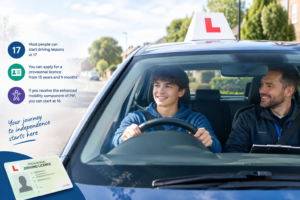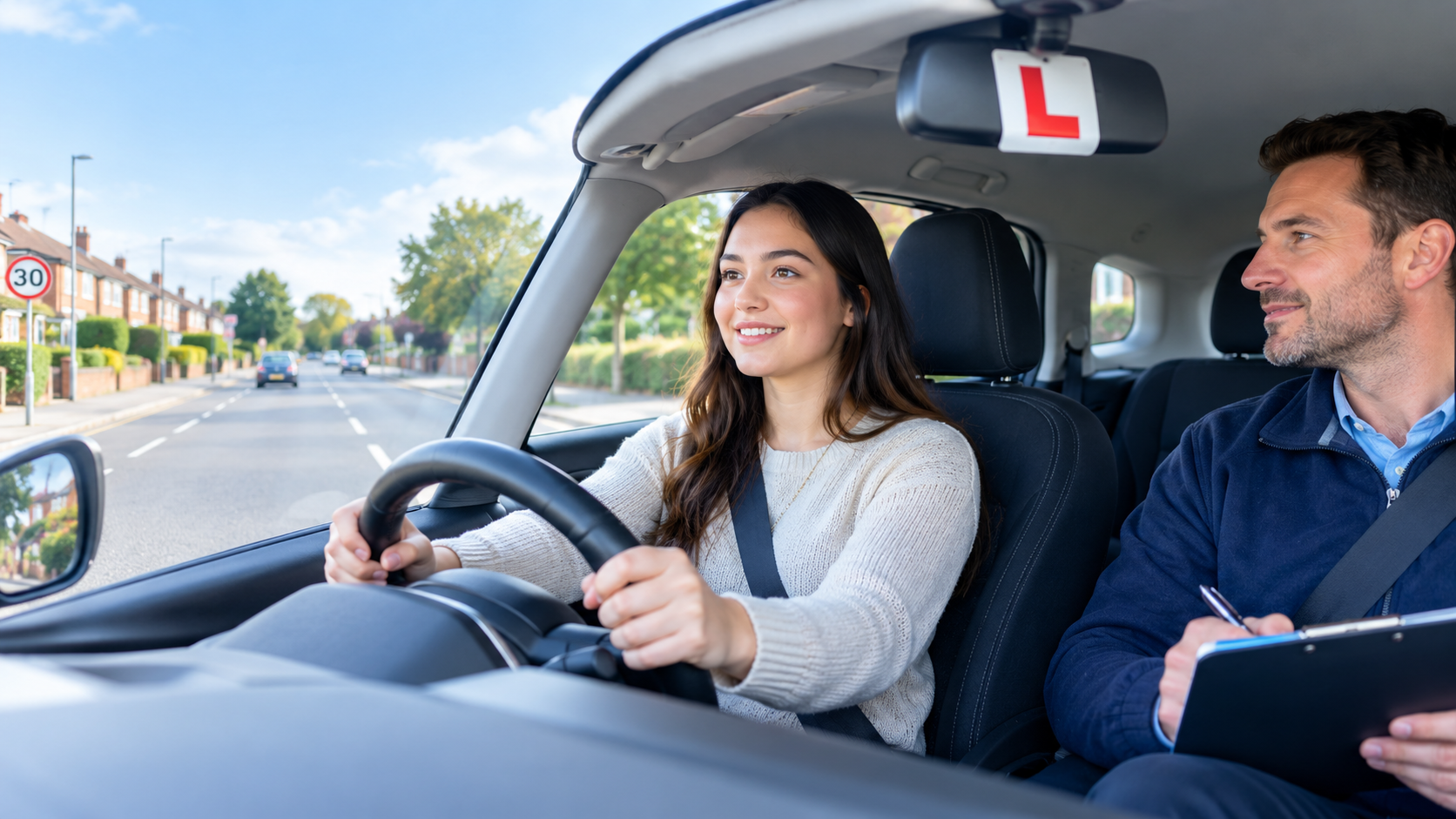
Most people can start learning to drive a car at 17. That is the minimum driving age for cars in the UK. You can apply for a provisional driving licence a little earlier — from 15 years and 9 months — but holding that licence does not let you drive a car on public roads straight away.
The gap between those two ages confuses a lot of learners. So let’s clear it up. A provisional licence is your entry ticket, while turning 17 is the moment you can actually get behind the wheel of a car with a qualified instructor or a suitable supervising driver.
If you’re weighing up when to book your first session, this guide walks through every age milestone and rule you need to know. Booking professional driving lessons at the right time — once you’re legally eligible — saves money and builds confidence faster. Read on for the exact ages, requirements, and preparation steps.
What Age Can You Start Driving Lessons in the UK?
You can start driving lessons in a car at 17 in Great Britain and Northern Ireland. That is the standard minimum age for driving a car, and it applies whether you learn with a professional instructor or practise privately.
There is one common exception. If you receive the enhanced rate mobility component of Personal Independence Payment (PIP), you can start driving a car at 16. This exception applies only to eligible recipients — it is not a general rule.
To take your first lesson on a public road, you need a valid provisional licence and a car showing L plates (or D plates in Wales). Check your date of birth against the 17 threshold before you book.
How Old Do You Have to Be to Get a Provisional Licence?
You can apply for a provisional driving licence from 15 years and 9 months. A provisional licence is the document that lets you learn to drive under supervision — it is not a full licence.
Applying early is smart planning. The application can take a few weeks to process, so many learners apply months before their 17th birthday so the licence arrives in time for their first lesson.
To apply, you must:
- Be at least 15 years and 9 months old — this is the minimum age set by the DVLA.
- Be able to read a number plate from 20 metres away, with glasses or contact lenses if needed.
- Live in Great Britain (Northern Ireland applications go through the DVA).
Apply online through GOV.UK for the fastest turnaround. Keep the licence safe — you’ll need it for every lesson.
Can You Start Driving Lessons Before You Are 17?
You cannot drive a car on a public road before you turn 17, except for the PIP exception noted above. Applying for your provisional licence early does not change the minimum driving age.
You do have options while you wait, though. You can learn to drive certain vehicles earlier — a moped or light quad bike from 16, for example — and you can prepare for the theory test in advance.
Off-road driving experiences on private land are another route. Some providers offer supervised sessions for younger learners on private tracks, which don’t require a licence because they take place away from public roads. Use the waiting time to start revising the Highway Code.
Can You Learn to Drive at 16 in the UK?
You cannot learn to drive a car at 16 in the UK unless you receive the enhanced rate mobility component of PIP. For most 16-year-olds, car lessons on public roads are not yet permitted.
What you can do at 16 is ride a moped or scooter (up to 50cc) after completing Compulsory Basic Training (CBT). That’s a separate licence category from cars.
So if you’re 16 and keen to get moving, a moped is the realistic first step. For cars, mark your 17th birthday in the diary and apply for your provisional licence a few months before.
What Are the Rules for Learner Drivers?
Learner drivers must follow strict rules whenever they drive a car. These rules keep you, your supervisor, and other road users safe while you build your skills.
As a learner, you must:
- Hold a valid provisional licence for the vehicle you’re driving.
- Be supervised by a qualified instructor or an eligible supervising driver.
- Display L plates (or D plates in Wales) clearly on the front and rear of the car.
- Be properly insured to drive that specific vehicle as a learner.
- Not drive on motorways unless with an approved driving instructor in a car fitted with dual controls.
Break any of these rules and you risk penalty points and fines — even before you’ve passed. Confirm your insurance covers learner driving before your first private practice session.
What Do You Need Before Starting Driving Lessons?
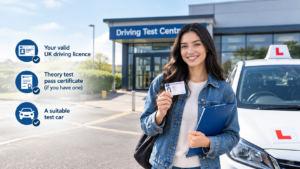
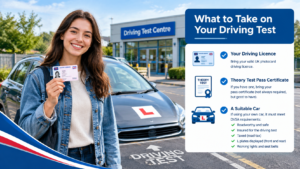
You need three things before your first lesson: a valid provisional licence, a roadworthy car with L plates, and appropriate insurance. Miss any one of these and the lesson can’t legally go ahead on public roads.
Here’s the full checklist:
- Get your provisional licence — apply from 15 years and 9 months so it arrives before you turn 17.
- Confirm you meet the eyesight standard — read a number plate from 20 metres.
- Arrange learner insurance — professional lessons include this; private practice requires your own cover.
- Fit L plates (or D plates in Wales) to the car front and rear.
- Check the car is taxed and has a valid MOT if it’s over three years old.
Professional instructors handle the car, insurance, and plates for you. Book with a qualified instructor to skip the admin.
Can You Practise Driving With Family or Friends?
You can practise driving with family or friends, provided your supervisor meets the legal requirements. Private practice alongside professional lessons is one of the best ways to build road experience.
According to GOV.UK, anyone supervising a learner without payment must:
- Be over 21 years old.
- Have held a full driving licence for that type of vehicle for at least three years.
The supervisor must also be qualified to drive the vehicle and sit in a position to take control if needed. The car needs L plates and valid learner insurance covering both you and the vehicle.
Private practice doesn’t replace professional tuition — it reinforces it. Pair regular lessons with supervised practice to progress faster.
When Can You Take the UK Theory Test?
You can take the car theory test from your 17th birthday. The theory test checks your knowledge of the Highway Code and your hazard perception skills — it’s a legal requirement before booking the practical test.
The test has two parts:
- Multiple-choice questions on road rules and safety.
- Hazard perception — spotting developing hazards in video clips.
You must pass both parts in the same sitting. Your theory test pass certificate is valid for two years, so plan your practical test within that window. Book your theory test through GOV.UK once you turn 17.
When Can You Take Your Practical Driving Test?
You can take your practical driving test from 17, once you’ve passed the theory test. The practical test assesses whether you can drive safely and independently in real traffic conditions.
Before booking, make sure you can:
- Perform the core manoeuvres confidently.
- Drive independently by following road signs or a sat nav.
- Handle different road types, including dual carriageways.
Most learners take the practical test several months after starting lessons, once their instructor confirms they’re ready. Ask your instructor for an honest readiness assessment before you book.
Does the Minimum Driving Age Differ Across the UK?
The minimum age to start driving a car is 17 across the whole UK. Great Britain (England, Scotland, and Wales) and Northern Ireland share the same 17 threshold for cars.
There are administrative differences worth knowing:
| Detail | Great Britain | Northern Ireland |
| Licensing body | DVLA | DVA |
| Minimum car driving age | 17 | 17 |
| Learner plates | L plates (D plates optional in Wales) | L plates |
| Restricted period after passing | None | R plates required for 1 year |
New drivers in Northern Ireland must display R plates and observe a lower speed limit for their first year after passing. Check whether you’re licensed under the DVLA or the DVA based on where you live.
How to Prepare for Your First Driving Lesson
Preparing for your first lesson makes it far more productive. A little groundwork means you spend the session driving rather than sorting paperwork.
Follow these steps:
- Confirm your provisional licence has arrived and bring it to the lesson.
- Start reading the Highway Code so road signs and rules feel familiar.
- Wear comfortable, flat shoes for better pedal control.
- Get a good night’s sleep — driving demands focus.
- Note any questions to ask your instructor at the start.
Arrive a few minutes early and relaxed. Bring your licence and a positive mindset to your first session.
Frequently Asked Questions
What age can you start driving lessons in the UK?
You can start car driving lessons at 17, or at 16 if you receive the enhanced rate mobility component of PIP.
Can you start driving lessons at 16?
No, not for cars — unless you receive the enhanced rate mobility component of PIP. You can ride a moped from 16 after CBT.
Can you apply for a provisional licence at 16?
You can apply for a provisional licence from 15 years and 9 months, so yes, you can apply at 16.
Can you take driving lessons before your 17th birthday?
You cannot drive a car on public roads before 17, but you can prepare by revising the theory and trying off-road sessions on private land.
What age can you take the driving theory test?
You can take the car theory test from your 17th birthday.
Do you need a provisional licence before driving lessons?
Yes. A valid provisional licence is required for any driving lessons or private practice on public roads.
Can a parent teach you to drive?
A parent can teach you if they’re over 21, have held a full licence for at least three years, and the car has L plates and valid learner insurance.
Ready to Start Learning?
Turning 17 soon or already there? Now is the time to get your provisional licence and book your first lesson. Qualified instruction helps you build safe habits from day one and prepares you properly for both tests.
If you’re eligible and ready to begin, contact Flex Driving Academy to arrange lessons that fit around your schedule and pace. Take the first step toward driving independently.
Conclusion
The rules are simple once you separate the two key ages. You can apply for a provisional driving licence from 15 years and 9 months, and you can start driving a car at 17. From your 17th birthday you can also sit the theory test and, once passed, the practical test.
Follow the supervision, licence, insurance, and vehicle requirements at every stage, and you’ll move from learner to independent driver safely. Apply for your provisional licence today so you’re ready the moment you turn 17.