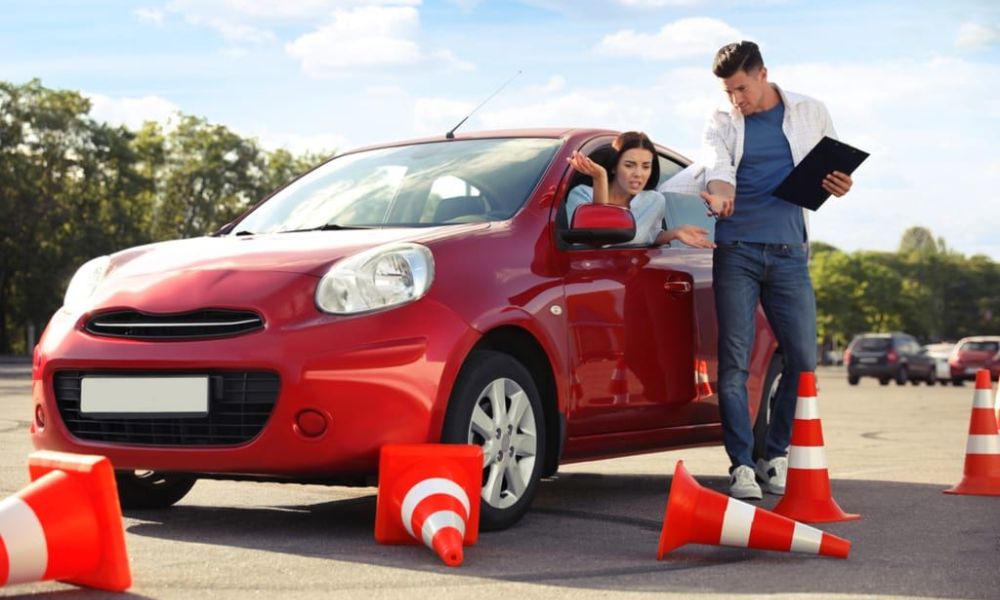
Most learner drivers who fail their practical test don’t fail because they can’t drive. They fail because of avoidable mistakes made under pressure. Knowing how to pass driving test first time comes down to smart preparation, consistent practice, and understanding exactly what examiners are looking for.
After more than a decade of teaching learner drivers, I’ve seen the same patterns come up again and again. The good news? Every common mistake is fixable. With the right driving test preparation, passing on your first attempt is absolutely achievable.
Here’s what you’ll learn in this guide:
- Why learners fail and how to avoid those pitfalls
- 15 practical, instructor-tested tips to help you succeed
- A test day checklist and answers to the questions learners ask most
Why Most Learner Drivers Fail Their Driving Test
Understanding why candidates fail is the first step toward making sure you don’t. According to official driving test standards, examiners record both serious faults (which result in immediate failure) and minor faults (which accumulate into a fail if you collect too many).
The most common reasons candidates fail include:
- Observation errors — not checking mirrors or blind spots at the right moments
- Poor junction control — approaching too fast, stopping too late, or misjudging gaps
- Incorrect speed management — driving too slowly out of nerves or creeping above the limit
- Lack of confidence — hesitating unnecessarily at roundabouts or junctions, frustrating other road users
- Failure to follow road signs — missing lane markings, ignoring speed signs, or not responding to road markings in time
One of my students, Emma, was a genuinely capable driver. She failed her first test purely because she forgot to check her mirrors before slowing down at a junction. That one repeated habit cost her the test. We fixed it in two lessons, and she passed second time with no serious faults.
How to Pass Driving Test First Time: 15 Expert Tips That Work
1. Take Enough Professional Driving Lessons
Rushing to test day before you’re ready is one of the biggest mistakes learners make. The DVSA recommends around 45 hours of professional tuition plus 22 hours of private practice. Your instructor will tell you honestly when you’re ready — trust that judgment.
2. Practice Regularly Between Lessons
Lessons alone aren’t enough. Driving with a parent or qualified supervising driver between lessons helps new skills become habits. Aim for at least two to three additional practice sessions per week. One learner I worked with cut his lesson count significantly just by practicing his mirror-signal-manoeuvre routine daily on quiet roads.
3. Learn the Test Routes
While examiners don’t follow a single fixed route, most test centres use a predictable area. Ask your instructor to practice in that area regularly. Knowing what to expect — including tricky roundabouts or tight junctions near the test centre — reduces surprises on the day.
4. Master Mirror Checks
Mirrors are the single most faulted area on driving tests. Check your mirrors before signalling, changing speed, and changing direction — every time, without exception. Make the check visible. Examiners need to see your eyes move. Practice making deliberate, obvious checks until it becomes second nature.
5. Perfect Your Junction Approach
Approach junctions at a controlled, reduced speed. Use the MSPSL routine: Mirror, Signal, Position, Speed, Look. One common mistake is braking too late or coasting in neutral to a junction — both can result in serious faults. Slow down early and assess the junction as you approach.
6. Maintain Appropriate Speed
Driving too slowly frustrates other road users and can be marked as a fault. Driving too fast risks a serious fault or worse. Match the speed limit where it’s safe to do so, and adjust for conditions. If a 30mph zone feels fast on a narrow road with parked cars, it’s fine to drive slightly under — just don’t crawl.
7. Improve Parking Manoeuvres
You’ll be asked to perform at least one manoeuvre during your test. Practice parallel parking, bay parking, and pulling up on the right until you can do each one calmly and accurately. Accuracy matters more than speed. A student who rushes a bay park and ends up on the line will likely earn a fault.
8. Practice Independent Driving
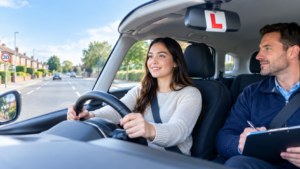
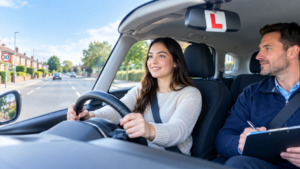
Around 20 minutes of your test will involve independent driving — following a sat nav or road signs without instruction. Get comfortable with this during lessons. The key is trusting yourself and continuing to apply all your normal checks, even without prompts.
9. Stay Calm Under Pressure
Test nerves are real, but they’re manageable. Practice slow breathing before you get in the car. Remember that the examiner isn’t there to catch you out — they want you to pass. Focus on each task as it comes rather than worrying about the test as a whole.
10. Avoid Common Serious Faults
Serious faults include: not stopping at a stop line, pulling out in front of oncoming traffic, losing control of the vehicle, or failing to act on an examiner’s instruction. Know these categories and make sure your driving never comes close to them.
11. Use Mock Driving Tests
A mock test with your instructor simulates the real experience. It highlights weaknesses you might not notice in normal lessons and helps you manage time pressure. Most learners who take mock tests feel noticeably more confident on the actual day.
12. Get Familiar With Road Signs
You’re expected to respond correctly to all road signs, lane markings, and traffic signals. Brush up using the official Highway Code. Pay particular attention to signs that affect lane position or speed — these are easy to miss when you’re focused on other things.
13. Sleep Well Before Test Day
A tired mind makes slow decisions. Get to bed at a reasonable hour the night before. Avoid cramming extra practice in on the eve of your test — it increases anxiety without improving skill. Rest is part of driving test preparation.
14. Arrive Early and Prepared
Plan to arrive at the test centre 10–15 minutes before your appointment. Rushing raises your stress levels before you’ve even started the engine. Have everything ready the night before so the morning is calm.
15. Treat the Test Like a Normal Drive
This is the most important learner driver tip of all. The examiner isn’t looking for a perfect performance — they’re checking that you can drive safely. Drive the way your instructor trained you to drive. That’s all you need to do.
Common Driving Test Mistakes to Avoid
Even well-prepared candidates make these errors under pressure:
- Missing mirror checks before braking or turning
- Rolling through stop signs instead of coming to a complete stop
- Poor lane positioning on bends or multi-lane roads
- Hesitation at roundabouts — waiting when it’s safe to go
- Speeding or driving too slowly — both are recordable faults
Being aware of these driving test mistakes in advance puts you in a far better position to avoid them.
Driving Test Day Checklist
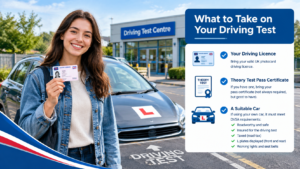
Use this driving test checklist before you leave the house:
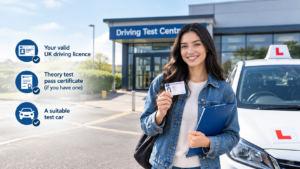
- Documents: Photo ID, provisional driving licence
- Vehicle: Tax, insurance, no warning lights, tyres in good condition
- Mental preparation: Light meal, water, calm breathing, positive mindset
- Arrival: At the test centre 10–15 minutes early
- Safety checks: Adjust mirrors and seat before moving off — examiners notice this
Frequently Asked Questions
How many driving lessons do I need before my test?
The DVSA suggests around 45 hours of professional lessons and 22 hours of private practice on average. That said, every learner is different. Your instructor is best placed to advise when you’re genuinely test-ready.
What is the most common reason people fail a driving test?
Observation and mirror-checking errors are the most frequently recorded faults. Candidates often forget to check mirrors before changing speed or direction, especially when under pressure.
Can I pass my driving test first time without intensive lessons?
Yes, but consistency matters more than format. Whether you take lessons weekly or in an intensive block, the key is that your skills are solid and repeatable before test day.
What should I do if I make a small mistake during the test?
Move on. One minor fault won’t fail you. Many candidates tense up after a small error and make more mistakes as a result. Stay focused on the next moment, not the last one.
Are mock driving tests worth it?
Absolutely. Mock tests are one of the most effective tools for driving test preparation. They expose gaps in your driving that normal lessons don’t reveal and build the composure you’ll need on the real day.
Conclusion
Knowing how to pass driving test first time isn’t about luck — it’s about preparation. Focus on your mirror checks, manage your speed, practice your manoeuvres, and drive with the calm confidence your training has built. Use the 15 expert tips in this guide as your roadmap from now to test day.
You’ve put in the work. Trust it. Safe driving starts with passing that test the right way — and you’re more ready than you think.