Getting on the road quickly appeals to almost every learner. That’s exactly what intensive driving courses UK providers promise. These fast-track programmes squeeze weeks or months of learning into a few focused days, helping you reach test-ready standard sooner than traditional weekly lessons.
But are they the right choice for someone who has never sat behind the wheel? As a driving education specialist, I’ve seen these courses work brilliantly for some learners and overwhelm others. This guide breaks down how they work, what they cost, and who should sign up.
What Are Intensive Driving Courses?
An intensive driving course is a condensed training programme that teaches you to drive over a short, concentrated period. Instead of one lesson a week, you take several hours of tuition daily across a few days or weeks.
People also call these crash course driving lessons or fast-track driving lessons. The goal stays the same: build your skills quickly and prepare you for the practical driving test in less time.
Here’s how a typical course is structured:
- Duration: Usually between 1 and 6 weeks, depending on your ability.
- Daily hours: Often 2 to 6 hours of driving each day.
- Total tuition: Commonly 20 to 40+ hours of lessons.
- Options: Available for both manual driving lessons and automatic driving lessons.
Most driving lesson packages also include help booking your practical test, so the whole process feels joined up.
How Intensive Driving Courses Work in the UK
The process follows a clear path from your first call to test day. Knowing what to expect helps you feel prepared.
- Booking your course
You contact a driving school UK provider or an independent driving instructor UK and choose a package that matches your experience level. Complete beginners usually need more hours than learners with some practice. - Assessment lesson
Many providers start with a short assessment drive. This helps the instructor judge your current ability and recommend the right number of hours. It’s an honest starting point, not a test. - Lesson planning
Your instructor builds a schedule around your skill gaps. Early sessions cover clutch control, steering, and observation. Later ones focus on manoeuvres, dual carriageways, and driving test preparation. - Practical test booking
Your provider usually books your DVSA practical test to line up with the end of your course. Because test slots fill fast, planning ahead matters. - Meeting DVSA requirements
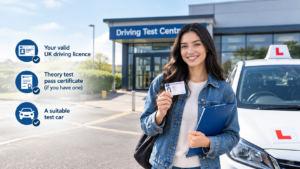
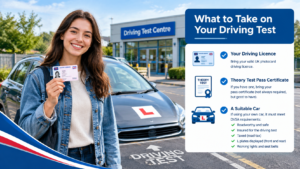
Before you can take the practical test, you must hold a valid provisional licence and pass your theory test. The Driver and Vehicle Standards Agency (DVSA) sets these standards, and you can confirm them on GOV.UK.
Quick summary: Book, assess, plan, prepare, and test. A good course keeps these stages tight and organised so you’re never left waiting.
Are Intensive Driving Courses Worth It for First-Time Learners?
For many first-time drivers, yes. But the answer depends on your budget, confidence, and how you learn best.
The Advantages of Intensive Driving Lessons
Intensive driving lessons offer real benefits when the fit is right:
- Faster learning: You can go from beginner to test-ready in weeks, not months.
- Better retention: Daily practice keeps skills fresh, so you don’t forget last week’s lesson.
- Focused instruction: Long sessions let you master tricky manoeuvres without stopping and restarting.
- A quicker licence: Ideal if you need to drive for work or study soon.
- Flexible scheduling: Many providers run courses during holidays or over consecutive weekends.
The Disadvantages to Consider
No course suits everyone. Watch out for these drawbacks:
- Learning pressure: Tight timelines can feel stressful, especially near test day.
- Information overload: Absorbing so much in a short window is tiring and hard for some learners.
- Upfront cost: You pay a larger sum at once rather than spreading it out.
- Physical and mental fatigue: Long driving days drain your focus, which can slow progress.
Intensive Driving Courses vs Weekly Driving Lessons
Both routes lead to a full licence. The difference lies in pace, cost, and how much pressure you can handle.
| Feature | Intensive Course | Weekly Lessons |
| Duration | 1–6 weeks | 6–12 months |
| Cost | Paid upfront, often similar overall | Spread out over time |
| Learning pace | Fast and concentrated | Gradual and steady |
| Flexibility | Fixed daily schedule | Fits around your week |
| Success rate | Strong for focused, committed learners | Strong for those who need time |
| Best for | Deadlines and quick starters | Nervous or busy learners |
Neither option is “better.” The right choice depends on your situation and personality.
Who Should Choose Intensive Driving Courses?
These courses reward learners who can commit fully for a short burst. Consider one if you fall into any of these groups:
- University students who want to pass during a break before term starts.
- Working professionals who can book time off and prefer to get it done in one go.
- Learners with deadlines such as a new job that requires driving.
- Complete beginners who thrive with consistent, back-to-back practice.
- Nervous drivers who build confidence faster through frequent repetition.
If you struggle to focus for long periods, weekly lessons may serve you better. You can always mix both approaches.
How Much Do Intensive Driving Courses Cost in the UK?
Prices vary widely, so treat any quote as a starting point. Several factors shape the final cost:
- Number of hours: More hours mean a higher price. Beginners usually need more.
- Manual or automatic: Manual driving lessons often cost slightly less per hour, but you may need fewer hours in an automatic.
- Location: City courses tend to cost more than rural ones.
- Instructor experience: A highly rated driving instructor UK may charge a premium.
- Test fees: The DVSA practical test fee is usually separate from your package.
Always ask exactly what’s included before you pay. A clear, itemised quote is a sign of a trustworthy driving school UK.
Tips for Passing an Intensive Driving Course
Passing quickly comes down to preparation and mindset. These steps give you the best shot:
- Pass your theory first. You can’t book the practical test until you have. Sort this early.
- Sleep well. Rest keeps your reactions sharp during long driving days.
- Practise between sessions. Even reviewing routes in your head helps.
- Ask questions. If a manoeuvre confuses you, speak up straight away.
- Review your mistakes. Understanding why an error happened stops it repeating.
- Stay calm. Nerves cause more faults than lack of skill. Breathe and focus.
- Choose an experienced instructor. A skilled teacher spots and fixes habits fast.
Common Mistakes First-Time Learners Make
Most test faults come from a handful of repeat errors. Knowing them helps you avoid them:
- Rushing: Hurrying through manoeuvres leads to careless slips.
- Poor observation: Missing hazards or failing to check junctions properly.
- Weak mirror checks: Forgetting the mirror-signal-manoeuvre routine.
- Speed control: Driving too fast or too slow for the conditions.
- Junction mistakes: Pulling out without proper checks or timing.
- Parking errors: Losing control during reverse bay parking or parallel parking.
The Highway Code covers these skills in detail. Reading it alongside your lessons reinforces safe habits.
Frequently Asked Questions
What are intensive driving courses?
They’re condensed programmes that teach you to drive over a short period, often days or a few weeks, with several hours of tuition each day.
How long do intensive driving courses take?
Most run between 1 and 6 weeks. Complete beginners usually need more hours than learners with prior experience.
Are intensive driving courses worth it?
For committed learners who can focus and have a deadline, yes. They help you pass your driving test quickly. Nervous or busy learners may prefer weekly lessons.
Who should choose intensive driving courses?
Students, working professionals, learners with time pressure, and beginners who learn well through frequent, consistent practice.
What are the advantages?
Faster learning, better retention, focused instruction, a quicker route to your licence, and flexible scheduling options.
What are the disadvantages?
Learning pressure, information overload, a larger upfront cost, and fatigue from long driving days.
How much do intensive driving courses cost in the UK?
Prices depend on hours, transmission type, location, and instructor experience. Always request an itemised quote before booking.
Can beginners take intensive driving lessons?
Yes. Many learner drivers start from scratch. Beginners simply need more hours to reach test standard.
Conclusion
Intensive driving courses UK options work well when they match your learning style and timeline. They deliver faster results, better skill retention, and a clear path to your practical driving test. The trade-offs are real too: higher pressure, more fatigue, and a larger upfront payment.
If you can commit fully for a short stretch, an intensive course could be your fastest route to a full licence. If you learn best with time and space, steady weekly lessons remain a solid choice.
Whatever you decide, choose a DVSA-approved driving instructor and a course built around your needs. That single decision shapes your confidence, your safety, and your chance of passing first time.