Learning to drive takes time, effort, and a lot of practice. When you finally book your practical exam, you naturally want to get your license without having to retake it. Figuring out how to pass driving test first time UK standards demand means understanding exactly what examiners look for. This guide breaks down the process so you can show up prepared, confident, and ready to succeed.
Understanding the UK Driving Test Format
The UK driving test consists of two main parts: the theory test and the practical test. You must pass your theory test before you can even book the practical exam. The theory part tests your knowledge of the Highway Code, road signs, and hazard perception.
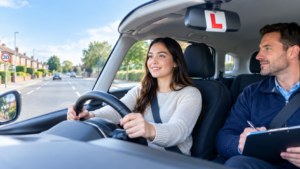
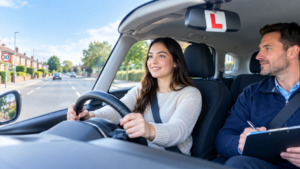
Once you move on to the practical test, examiners focus on four main areas: observation, control, confidence, and safety. They want to see that you can drive independently without prompts from your instructor.
During the practical test, you will complete about 20 minutes of independent driving. You will follow directions from a sat nav or traffic signs. The examiner will also ask you to perform one specific maneuver. This could be a parallel park, bay parking (driving in and reversing out, or reversing in and driving out), or pulling up on the right and reversing. You might also need to perform an emergency stop.
Driving Test Tips UK – Proven Strategies to Pass First Time
Many great driving test tips UK instructors share focus on building safe, repeatable habits. Examiners want a safe driver, not a perfect robot.
- Master the mirror-signal-maneuver routine: Check your mirrors well before you change speed or direction. This is a core part of safe driving.
- Maintain proper speed control: Drive according to the road conditions. Do not rush, but do not drive so slowly that you hold up traffic.
- Hold your lane discipline: Keep a steady position in your lane, especially on roundabouts and dual carriageways.
- Perfect your junction approach: Slow down early. Give yourself time to assess the traffic and make safe decisions before you emerge.
Common Driving Test Mistakes to Avoid
Many capable learners fail because of minor errors that add up. Knowing the top driving test mistakes to avoid gives you a huge advantage.
- Failing to observe at junctions: You must look thoroughly before pulling out. A quick glance is not enough.
- Poor mirror checks: Many people forget to check their blind spots before moving off or changing lanes.
- Hesitation: While you need to be safe, waiting at a clear junction shows a lack of confidence and can cause hazards for drivers behind you.
- Rolling stops: You must come to a complete stop at “Stop” signs and red lights. Rolling through them is an instant fail.
- Struggling to move off safely: Always check around your entire car before pulling away from the side of the road.
UK Driving Test Checklist Before Test Day
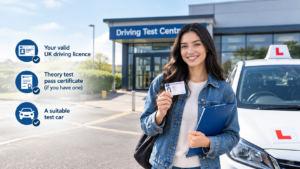
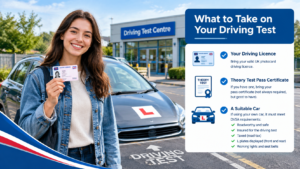
Having a clear UK driving test checklist helps you avoid last-minute panic. Make sure you have these items sorted before your test day arrives.
- Your provisional driving license: You must bring your physical photocard license.
- Your theory test pass certificate: Bring this just in case the system goes down.
- A suitable car: Most people use their instructor’s car. If you use your own, it must meet strict DVSA rules, including having L-plates and extra mirrors.
- Glasses or contact lenses: If you need them to read a license plate from 20 meters away, you must wear them.
How to Prepare in the Final 7 Days
The week before your test is crucial for smoothing out small issues. Do not try to learn new skills. Instead, focus on perfecting what you already know.
Take at least one mock test with your instructor under real exam conditions. Treat it exactly like the real thing. Listen carefully to your instructor’s feedback afterward. Focus your remaining lessons on fixing those specific issues.
Spend some time driving around the areas near the test center. While you cannot memorize every route, getting comfortable with local roundabouts, complex junctions, and speed limit changes will help you feel more at ease.
Nervous Driver Tips
Nerves ruin many good driving tests. A nervous first-time driver might grip the wheel too tightly, forget to breathe, or make sudden, jerky movements.
If you feel anxious, remember that the examiner just wants to make sure you are safe. They are not trying to trick you. If you make a small mistake, like stalling the car, take a deep breath. Secure the car with the handbrake, restart the engine, and complete your safety checks before moving off again. Many learners pass even after stalling because they handle the situation safely.
If you misunderstand an instruction, simply ask the examiner to repeat it. Going the wrong way safely is not a fail, but making a dangerous lane change to avoid missing a turn will result in a serious fault.
Final Advice
To give yourself the best chance, treat your test like a standard driving lesson. Drive exactly how your instructor taught you. Stay observant, keep your speed steady, and prioritize safety above all else.
FAQs
How to pass driving test first time UK?
The best way to pass your first time is to take consistent lessons, pass several mock tests with your instructor, and master all basic maneuvers. You must demonstrate safe, independent driving without needing prompts.
What are the most common driving test mistakes?
The most frequent fails come from poor observations at junctions, failing to check mirrors before changing direction, hesitating too long, and not moving off safely.
How many lessons do I need before the test?
The DVSA notes that most learners need about 45 hours of professional lessons and 22 hours of private practice to pass. However, everyone learns at their own pace. Trust your instructor when they say you are ready.