More learners than ever are choosing to learn to drive an automatic car — and it’s easy to see why. Without a clutch pedal to worry about, you can focus on what really matters: reading the road, building confidence, and developing safe driving habits. Whether you’re booking your first automatic driving lessons or simply exploring your options, this beginner automatic driving guide covers everything you need to know, from understanding the controls to passing your test.
What Is an Automatic Car?
An automatic car uses an automatic transmission that changes gears for you. Unlike a manual vehicle, there’s no clutch pedal to operate. The car manages gear changes based on your speed and engine load, making the driving experience considerably smoother and less demanding for new drivers.
Understanding the Gear Selector: P, R, N, D
The gear selector in an automatic car typically has four main positions:
- P (Park) — Locks the transmission. Use this when the car is stationary and switched off.
- R (Reverse) — Moves the car backwards.
- N (Neutral) — Disconnects the engine from the wheels. Rarely used in normal driving.
- D (Drive) — The standard position for forward driving.
Some automatics also include L (Low) or numbered gears for specific conditions like steep hills, but most beginners won’t need these regularly.
Why Beginners Find Automatic Cars Easier to Drive
Driving automatic for the first time often feels far less overwhelming than tackling a manual car. Here’s why:
- Simpler controls — No clutch means one less thing to coordinate.
- Less stress in traffic — Slow-moving city driving doesn’t require constant gear changes.
- Easier hill starts — Automatics handle hill starts naturally, reducing the risk of rolling back.
- Better road awareness — With less mechanical concentration required, you can focus more on hazards, observations, and road positioning.
Many of my learners tell me they feel calmer from their very first lesson in an automatic, simply because they’re not fighting the gears.
Step 1: Get Familiar with the Controls
Before you turn the key, take a moment to understand what’s in front of you.
- Steering wheel — Controls your direction of travel.
- Accelerator pedal — Right foot only. Increases speed.
- Brake pedal — Right foot only. Slows or stops the car.
- Gear selector — Usually a lever or dial between the front seats.
- Mirrors — Interior rear-view mirror plus two exterior door mirrors.
- Indicators — Left stalk on most UK cars. Always signal your intentions.
- Handbrake/Parking brake — Keeps the car still when stationary.
- Dashboard warning lights — Learn what the common symbols mean before you drive.
Step 2: Adjust Your Driving Position
A correct driving position reduces fatigue and improves your control of the vehicle.
- Seat — Adjust so your knees are slightly bent when pressing the pedals fully.
- Steering wheel — Set it at a comfortable height and distance. Your arms should have a slight bend.
- Mirrors — Your rear-view mirror should frame the rear window. Door mirrors should show a sliver of your car and the road behind.
- Seatbelt — Always fasten it before doing anything else. It’s the law — and it saves lives.
Step 3: Starting an Automatic Car
Follow this sequence every time:
- Enter the vehicle and close the door.
- Fasten your seatbelt.
- Press and hold the brake pedal with your right foot.
- Start the engine (key or start button).
- Select D (Drive) on the gear selector.
- Release the handbrake.
- Check mirrors and blind spots, then gently ease off the brake to move away.
Never select Drive or Reverse without your foot on the brake — the car will creep forward due to what’s called “idle creep.”
Step 4: Moving Off Smoothly
Smooth, gradual acceleration is the hallmark of a confident driver. As you release the brake, lightly press the accelerator and let the car build speed naturally.
Before moving off, always complete the Mirror–Signal–Manoeuvre (MSM) routine:
- Check your mirrors.
- Signal if necessary.
- Manoeuvre when it’s safe to do so.
A common beginner mistake is moving off too quickly without checking the blind spot over the shoulder. Always glance before pulling away.
Step 5: Steering and Lane Positioning
Keep both hands on the steering wheel using the pull-push technique — avoid crossing your arms or gripping too tightly. Look well ahead rather than directly in front of the bonnet; this helps you steer smoothly and spot hazards earlier.
Stay in the centre of your lane and maintain safe distances from parked cars to avoid the risk of a door opening into your path.
Step 6: Braking and Stopping Safely
Progressive braking — easing the brake gently and then increasing pressure — creates a smooth stop rather than a sudden jolt. Approach junctions and pedestrian crossings early, giving yourself enough time to react.
In an emergency, press the brake firmly and hold it. Modern automatics with ABS (Anti-lock Braking System) will prevent the wheels from locking up.
Step 7: Parking an Automatic Car
When parking, always select P once the car is fully stationary and apply the handbrake. Use R only when you’re ready to reverse — always check all mirrors and blind spots first.
Common parking manoeuvres include:
- Bay parking — Forward or reverse into a marked bay.
- Parallel parking — Reversing into a space alongside the kerb.
- Reverse parking — Reversing into a space behind another vehicle.
Take your time with these manoeuvres during your automatic driving school lessons — accuracy matters more than speed.
Step 8: Driving in Different Conditions
- City traffic — Stay alert, anticipate traffic flow, and use the MSM routine at every junction.
- Motorways — Maintain a two-second gap minimum (more in wet conditions). Match motorway speed gradually when joining.
- Rain — Increase stopping distances and use dipped headlights in poor visibility.
- Night driving — Use dipped headlights, slow down, and allow extra time to react.
- Busy intersections — Be patient, observe carefully, and only move when you’re sure it’s safe.
Common Mistakes Beginners Make with Automatic Driving
| Mistake | Solution |
| Using both feet | Always use your right foot only for both pedals |
| Resting a foot on the brake | Keep your foot clear of pedals when not in use |
| Forgetting to engage Park before leaving | Always select P and apply the handbrake |
| Rushing observations before moving off | Complete full mirror and blind spot checks every time |
| Panic braking instead of progressive braking | Practise smooth, gradual stops in a quiet area first |
| Looking too close to the car | Train your eyes to look further ahead |
| Accelerating too hard from stationary | Apply gentle, consistent pressure on the accelerator |
| Neglecting to signal early enough | Signal well in advance to give other road users time to react |
Automatic Driving Test Tips
- Observations — Examiners look for consistent, deliberate mirror checks and effective blind spot glances.
- Speed management — Stay within limits and adjust for road conditions.
- Hazard awareness — Respond early to potential hazards — don’t wait until the last moment.
- Confidence — Hesitation at junctions is a common minor fault. Trust your training and commit to safe decisions.
- Preparation — Mock tests with your instructor are invaluable before the real thing.
Frequently Asked Questions
Is it easier to learn to drive an automatic car?
Yes, most beginners find it easier. Without a clutch pedal, there’s less to coordinate, which allows you to concentrate on road awareness and safety from the very first lesson.
How many automatic driving lessons do beginners need?
The average learner requires around 40–45 hours of professional tuition, though this varies by individual. Some people are ready in fewer lessons; others need more practice. Consistency is more important than speed.
Can I pass my driving test in an automatic car?
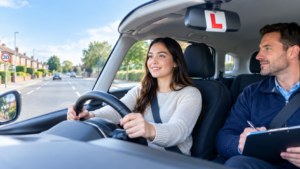
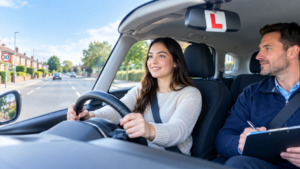
Yes. You can take and pass your UK driving test in an automatic car. However, your licence will be restricted to automatics only. If you later want to drive a manual, you’ll need to pass an additional test.
What gear should I use when stopped?
If you’re stopping briefly (at traffic lights, for example), keep the selector in D and hold the brake. If you’re parked and leaving the vehicle, always select P.
Are automatic cars good for nervous drivers?
Absolutely. The reduced mechanical demands of automatic transmission driving mean nervous drivers can build confidence more quickly, particularly in heavy traffic and on hill starts.
Expert Driving Instructor Advice
After 15 years of teaching learners, the most important thing I tell every new driver is this: slow down your thinking, not just your speed.
Automatic cars make the mechanical side of driving simpler, but safe driving is about anticipation, observation, and decision-making. Take your time to develop these skills properly during your lessons.
A few key recommendations:
- Choose an approved instructor from a reputable automatic driving school.
- Don’t rush to test day — practise until manoeuvres feel natural, not just memorised.
- Between lessons, read the Highway Code regularly.
- Supplement lessons with hazard perception practice online.
- Stay well-rested before every lesson. Tiredness affects concentration more than most people realise.
Conclusion
Learning to drive an automatic car is one of the most achievable goals for any beginner. The process is straightforward when you understand the controls, follow the correct routines, and take the time to practise properly. The automatic transmission does the mechanical heavy lifting — your job is to focus on becoming a safe, aware, and confident driver.
Book professional automatic driving lessons with a qualified instructor, work through each step at your own pace, and remember that every experienced driver started exactly where you are now. The road ahead is yours — go and enjoy it.