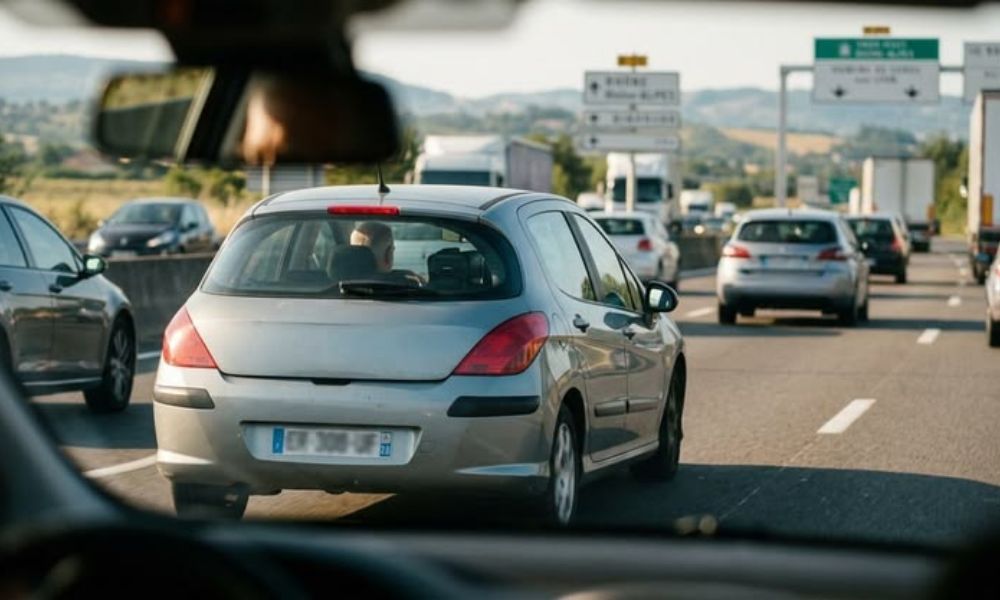
On a UK motorway, you should use the left-hand lane whenever you are not overtaking, and return to it when it is safe to do so after passing slower traffic. This is the core of good lane discipline, set out in Rule 264 of the Highway Code: keep in the left lane unless overtaking. The middle and right-hand lanes are not simply extra “cruising” lanes for comfortable driving — they exist mainly for overtaking.
Getting this right matters. Correct lane discipline keeps your position predictable, cuts down unnecessary lane changes, and helps traffic flow smoothly for everyone. It also reduces the risk of the frustrating and dangerous situations that lead to tailgating and rushed manoeuvres.
At Flex Driving Academy, we help learners and newly qualified drivers build genuine motorway confidence, so decisions like these become second nature. This guide explains exactly when to use each lane, how to overtake properly, and the common mistakes to avoid.
When Should You Use the Left-Hand Lane of a Motorway?
The rule is simple: keep left unless overtaking.
Use the left-hand lane when:
- You are travelling normally and not passing another vehicle.
- Your route and the traffic conditions make it the appropriate lane to sit in.
- You have finished overtaking and there is a safe, suitable gap to move back into.
You should not stay in the middle or right-hand lane simply because it feels easier or you expect to overtake again shortly. If the left lane is clear, that is where you belong.
Before any lane change, always read the road first. Check signs, road markings, upcoming junctions, the flow of traffic around you, and any hazards ahead. Rule 264 makes the principle clear — the left lane is your default, and everything else is a temporary move with a specific purpose.
What this means: treat the left-hand lane as home. You leave it briefly to overtake, then come back.
Why Is the Left-Hand Lane the Normal Driving Lane?
It is tempting to call it the “slow lane,” but that label is misleading. The correct speed in any lane depends on the speed limit, the traffic, the weather, and the road conditions. “Left lane” is simply a more accurate description.
Keeping left as your default brings real benefits:
- Better traffic flow — faster vehicles can pass on the right without weaving.
- Predictable driving — other drivers can anticipate what you’ll do.
- Fewer lane changes — less shuffling between lanes means fewer conflict points.
- Easier overtaking — the outer lanes stay available for vehicles that need them.
- Improved awareness — you notice traffic approaching from behind more clearly.
- Reduced risk of undertaking — sensible lane use keeps everyone on the correct side.
When most drivers follow this principle, the whole carriageway works better. Problems usually start when people sit in the middle lane out of habit, forcing others to move across two lanes just to pass.
How to Overtake Correctly on a Motorway
The Highway Code (Rule 267) is clear that overtaking should normally be done on the right, and only when it is safe and legal. Rushed or careless overtaking causes many motorway incidents, so take your time and follow a consistent routine.
Here’s the sequence to follow:
- Check your mirrors to build a full picture of the traffic around you.
- Assess the speed of vehicles behind — traffic can approach far quicker than you expect.
- Make sure the lane is clear both ahead and behind before you commit.
- Check your blind spot with a quick sideways glance, in case a vehicle has slipped out of mirror view.
- Signal in good time so others know your intention.
- Move out smoothly into the lane on your right.
- Complete the overtake without dawdling or holding up faster traffic behind you.
- Return to the left once it’s safe to do so.
Watch out for motorcyclists in particular — they can be harder to spot and often travel quickly. Overtaking is not a race, and it isn’t about pushing past every vehicle you can. It’s a controlled manoeuvre with a clear start and finish.
When Should You Return to the Left-Hand Lane?
You return to the left lane once you have safely passed the vehicle and there is a suitable gap to move into.
Keep these points in mind:
- Don’t cut in immediately in front of the vehicle you’ve just overtaken.
- Leave a proper gap so the other driver isn’t forced to brake.
- Check your mirrors before moving back across.
- Signal if it helps other drivers understand your move.
- Avoid weaving repeatedly between lanes for small speed gains.
- Plan ahead if your exit is coming up, so you can move left in good time.
The aim is a safe, smooth return — not a rushed dive back to the left the instant you clear the vehicle. Good drivers judge the space, then move calmly.
What About the Middle and Right-Hand Lanes?
These lanes have legitimate uses, but neither is a permanent travelling lane.
The middle lane
Use the middle lane when you are overtaking slower traffic in the left lane, or when the road layout and traffic conditions genuinely require it. Once you’ve passed and there’s a safe gap, move back left. Sitting in the middle lane with an empty lane on your left is one of the most common — and most frustrating — motorway habits.
The right-hand lane
The right-hand lane is generally for overtaking, particularly on motorways with three or more lanes. Use it to pass, then return towards the left as space allows.
Under Rule 265, certain vehicles are not permitted to use the right-hand lane of a motorway with three or more lanes — for example, larger goods vehicles and vehicles towing trailers. Most car drivers won’t be affected by this, but it’s worth knowing why some vehicles stay left.
Is It Ever Wrong to Stay in the Left Lane?
The left lane is normally the correct place to be, but good driving means responding to what’s actually happening on the road — not blindly following a rule.
There are times when staying left could create a hazard:
- A slower vehicle ahead that you need to overtake.
- Roadworks that narrow or reroute the left lane.
- Lane closures shown by a red ‘X’ or signs directing you across.
- Approaching a junction where the left lane may lead off the motorway.
- Traffic management and variable speed limits on smart motorways.
- Emergency vehicles or stopped vehicles on the hard shoulder or in an emergency area — where safe, move over to give them room.
- Changing motorway signs that instruct you to switch lanes.
For example, if you spot a stopped vehicle in an emergency area ahead, and it’s safe to do so, moving into the adjacent lane creates a valuable buffer of space. Lane discipline works alongside observation, not instead of it.
Common Motorway Lane Mistakes to Avoid
- Staying in the middle lane unnecessarily when the left is clear.
- Sitting in the right-hand lane long after overtaking.
- Overtaking without checking your mirrors first.
- Forgetting to check the blind spot before moving out.
- Cutting back to the left too soon and forcing others to brake.
- Weaving in and out of lanes repeatedly.
- Following the vehicle in front too closely.
- Missing motorway signs, variable speed limits, or lane closures.
- Driving at a speed that doesn’t suit the conditions.
- Deliberately moving left to undertake slower traffic.
A quick note on undertaking: Rule 268 says you shouldn’t overtake on the left or move into a left-hand lane to pass. However, in congested conditions where lanes are moving at similar speeds, traffic in your lane may naturally pass slower traffic to the right. That’s normal queue movement — not deliberate undertaking — so you can keep pace with your lane.
Practical Example: Using the Lanes Correctly
Picture yourself on a three-lane motorway, travelling at a steady speed, with no one to overtake. The left lane is where you should be — it’s clear, predictable, and correct.
Now a slower lorry appears ahead. Here’s how to handle it:
- Check your mirrors to read the traffic behind you.
- Check your blind spot with a quick glance to the right.
- Signal and, when safe, move into the middle lane.
- Pass the lorry at a steady, appropriate speed.
- Check your mirrors again once you’re clearly past it.
- Return to the left lane when there’s a safe gap, without cutting in.
That’s the whole cycle: leave the left lane with purpose, overtake safely, and return promptly. Repeat it whenever you meet slower traffic.
Motorway Driving for Learners and New Drivers
Motorway lane discipline can feel daunting at first. Vehicles travel faster, and you need to make decisions earlier than on ordinary roads. That’s completely normal — and it’s exactly why practice with an expert helps so much.
Since 2018, learners have been able to gain motorway experience with a qualified instructor. If you’re unsure of the rules, our guide on whether can learner drivers drive on motorways explains everything clearly. You can also read more in our overview of motorway driving lessons for new drivers.
Flex Driving Academy offers dedicated motorway driving sessions, giving you supervised experience at higher speeds. These lessons can cover:
- Lane discipline and keeping left
- Joining motorways safely via the slip road
- Overtaking with confidence
- Safe following distances
- Effective mirror checks
- Reading motorway signs and variable speed limits
- Exiting safely
- Building confidence at speed
Practising these skills with an instructor beside you takes the pressure off and helps good habits stick.
Conclusion
The answer stays the same throughout: on a UK motorway, keep to the left when you’re not overtaking, and return to the left when it’s safe and sensible after passing slower traffic. The middle and right-hand lanes are for overtaking, not for settling in.
Read the road, plan your moves early, and treat every lane change as a deliberate, checked manoeuvre. Do that consistently and you’ll drive more smoothly, more safely, and with far less stress.
If motorways still feel intimidating, that’s normal — and it’s fixable. Consider booking professional motorway training with Flex Driving Academy to build real confidence on high-speed roads.
Frequently Asked Questions
When should you use the left-hand lane of a motorway?
Use the left-hand lane whenever you are not overtaking. It’s your default position on a UK motorway. If you move out to pass slower traffic, return to the left once it’s safe and there’s a suitable gap, in line with Highway Code Rule 264.
Should you always drive in the left lane on a motorway?
Almost always, yes — the left lane is the normal driving lane. The exceptions are when you’re overtaking, when signs or lane closures direct you elsewhere, or when you’re moving over to give space to stopped vehicles or emergency workers.
When should you move from the left lane to the middle lane?
Move to the middle lane when you need to overtake slower traffic in the left lane, or when road layout or conditions require it. Check your mirrors and blind spot, signal, then move out. Return to the left once you’ve safely passed.
When should you return to the left lane after overtaking?
Return once you’ve cleared the vehicle you passed and there’s a safe gap to move into. Don’t cut in front of the vehicle, leave adequate space, check your mirrors, and signal if it helps others. Avoid diving back left too quickly.
Can you overtake on the left on a motorway?
No. Rule 268 says you shouldn’t overtake on the left or move into a left-hand lane to pass. The one exception is congested traffic, where lanes move at similar speeds and your lane may naturally pass slower traffic to the right — that’s normal, not deliberate undertaking.
Why is motorway lane discipline important?
Good lane discipline keeps traffic flowing, makes your driving predictable, and reduces unnecessary lane changes and conflict. It lowers the risk of tailgating, undertaking, and rushed manoeuvres — making motorways safer and less stressful for everyone.